
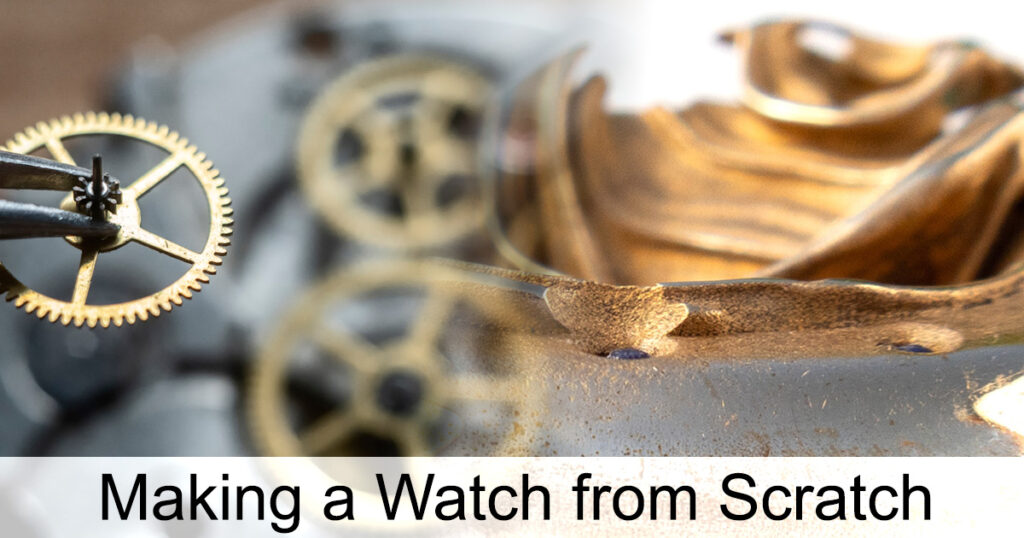
. . . with no experience and no conventional watch parts.
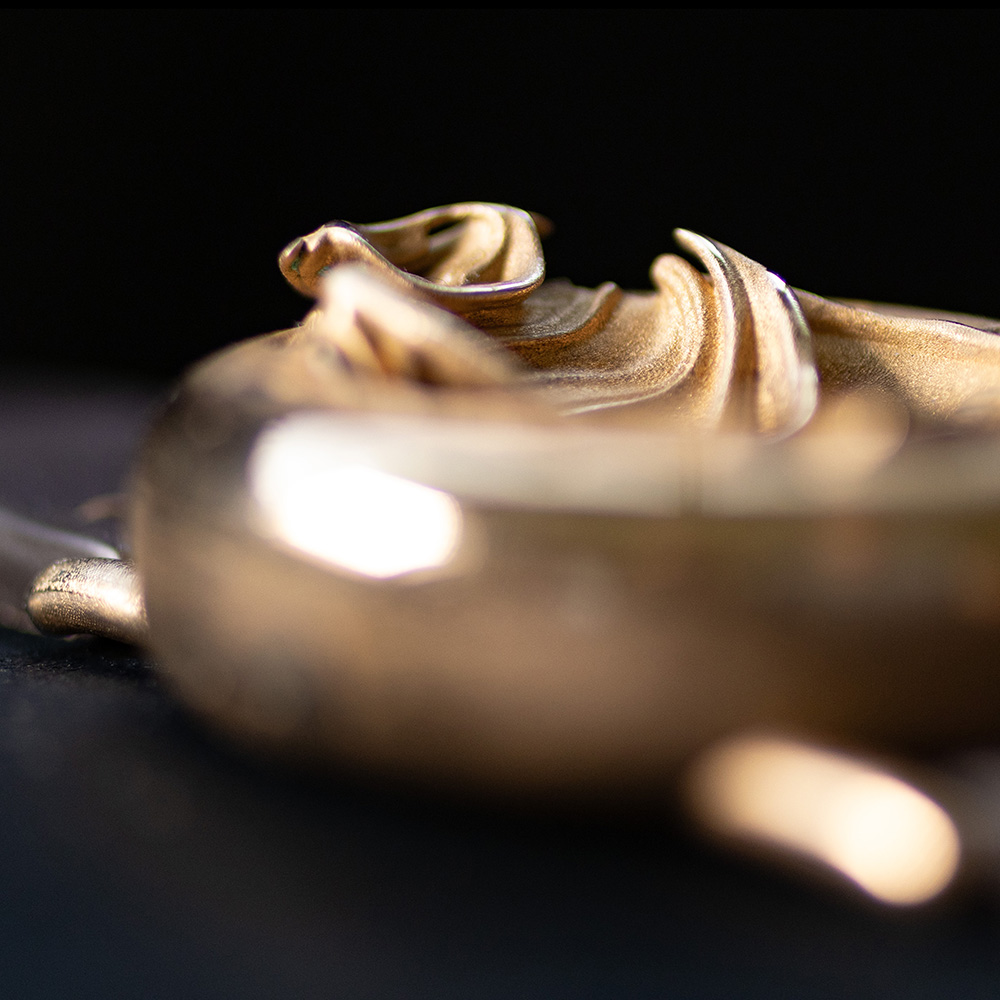
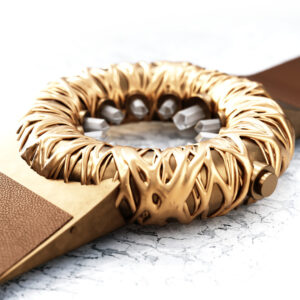
Our Fractal Emergence watch is shown on the right.
Sections of this article:
- What is a Watch?
- From Concept to Wrist: How a New Watch is Usually Designed and Made.
- Making a Watch From Scratch: How “from Scratch” is a Watch, Really?
- Why Unconstrainedtime Watches are Made so Differently From Other Watches
Introduction.
I’ll start by explaining what a watch is, and why, then tell you about how watches are usually designed and made, and the history behind their design concepts and influences. I’ll tell you about the concepts involved in making a watch from scratch, and examine how “from scratch” it is really.
I’ll also explain why our UnconstrainedTime watches (below) are conceptually so different from other watches, significantly more “from scratch” than most, and how that relates to the very unique process for how our watches are created, designed, made and assembled, along with the challenges that caused and some of the developments we plan for the future of our unique brand.
What is a Watch?
Almost all watches are portable devices which include:
- a method of keeping track of time,
- and a method of displaying the time for humans to understand.
I’ll explore ways that both of those things are done, below.
While most watches fit this basic definition of what a watch is, there are a small number of watches which challenge even this most fundamental concept by not tracking or displaying the time at all, yet still look like watches, including:
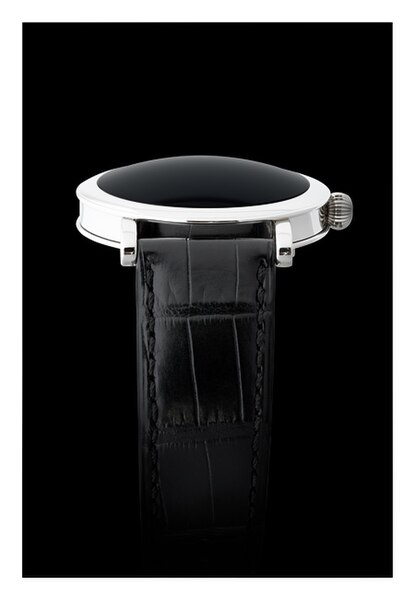
- the Haldeman H9 (above), which has a hidden moving mechanism but no visible time indication,
- “anti-time” watches by Kevin Bertolero which feature playful creations but don’t tell the time,
- Qannati Objets d’Art non-timekeeping “Eternity Bracelets”,
- and some watches on Etsy, some of which just say “now” and some of which include miniature scenes instead of a time display.
Ways of keeping track of time.
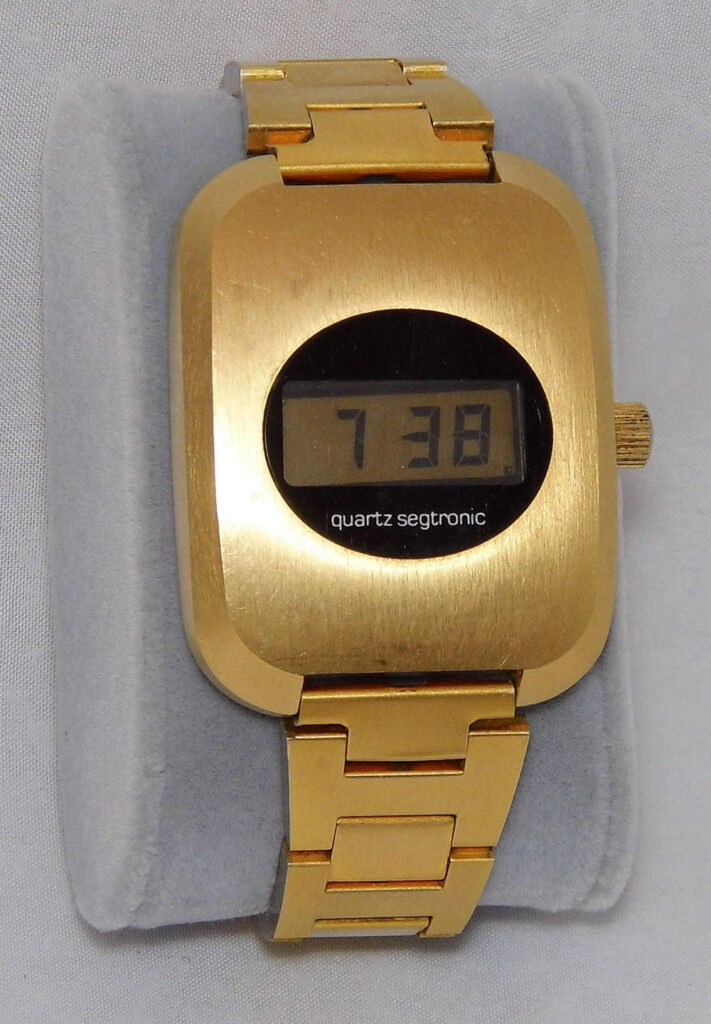
The internal time-keeping mechanism of most watches has been, since the 1970’s, based on electronic measurement of the vibrations of a quartz crystal, whether the time-display is mechanical or electronic (although the time-keeping of some watches from enthusiast or luxury segments of the market is still mechanical).
Here is an example of an early quartz watch, the Epsa-Optel Quartz Segtronic:
There are some current watches which use mechanical time-keeping (which was the only option available before the 1970’s). Since this is less accurate and significantly more expensive to implement than quartz time-keeping, keeping time mechanically is a deliberate philosophical choice, typically influenced by considerations such as a focus on tradition, craft, and interest in mechanical engineering, as well as having significant influences from related marketing concepts.
And there are watches which use atomic vibrations for time-keeping. A very small number of them do so directly within the watch itself, with the majority doing so indirectly by receiving radio signals which specify the time very precisely, as smart-watches do by connecting to the phone network in some way (as well as using a quartz crystal to track time in between connections).
Ways of displaying the time.
Most watches today visibly display the time either using:
- the mechanical mechanism of hands and dial (inherited from early mechanical clocks and 16th‑century portable clock‑watches),
- or an electronic display involving changing numerals (which originated in the 1970’s).
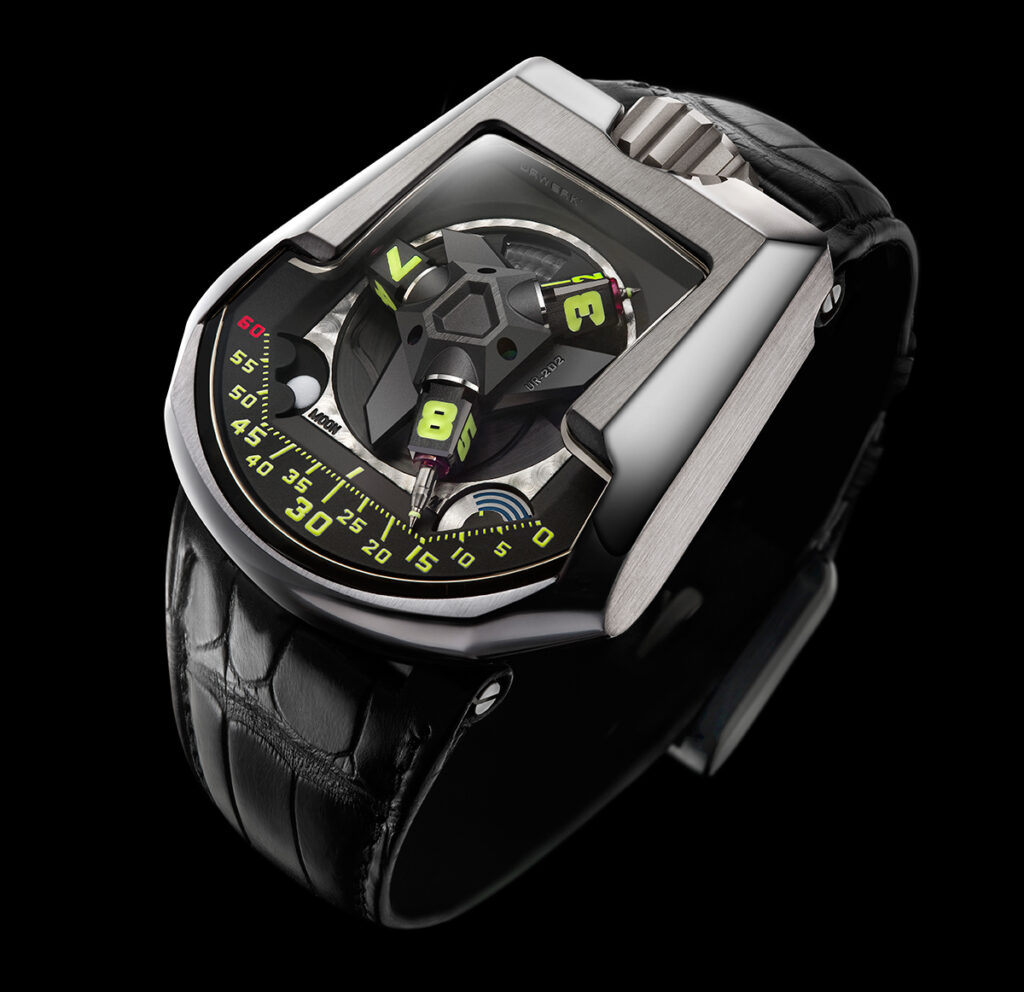
A few watches use mechanically displayed numerals instead of (or as well as) hands and a dial. There are various ways of doing that, including the revolving satellite display used on some Urwerk watches such as the UR202 below:
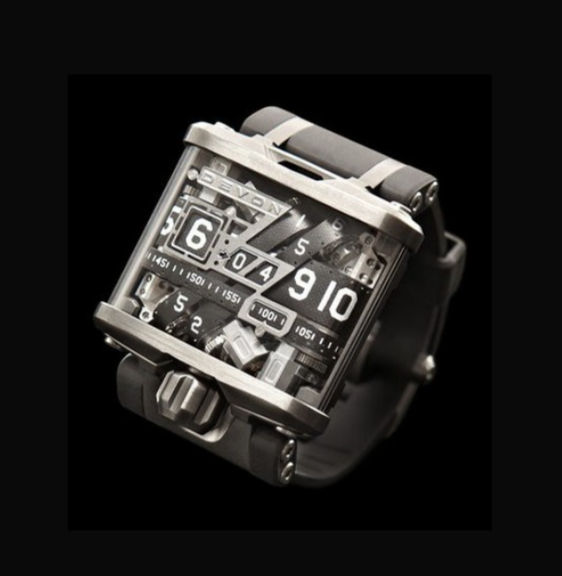
. . . and the innovative time-belts display used on Devon watches (below):
There are a few watches which use other methods of displaying the time, including the Mr. Jones Sun and Moon below which uses a 17th century method of displaying the time:


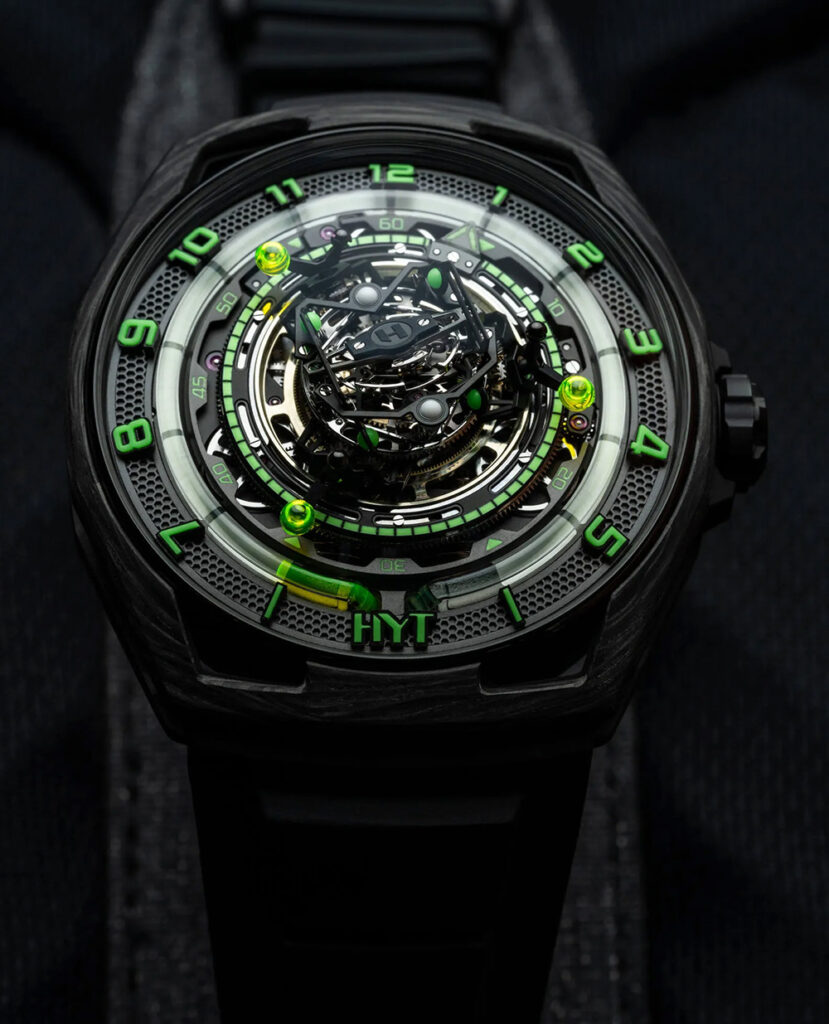
HYT which use a fluidic time-display (below):
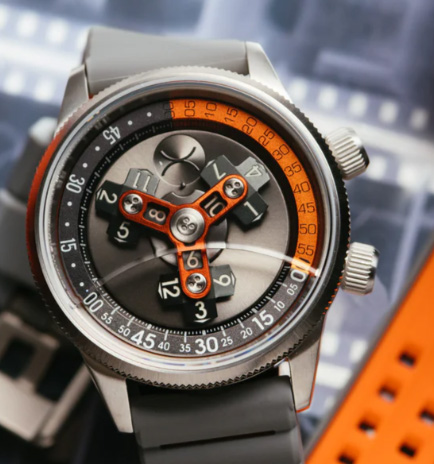
Xeric watches (below):
F.P. Journe FFC, with a literal hand that points to the time,
The Dual Linear Wrist Watch by Division Furtive:
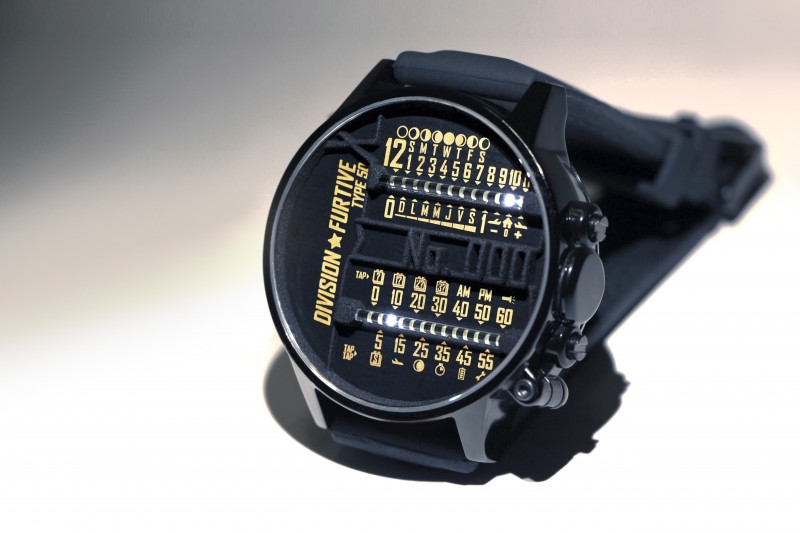
. . . which uses an innovative digital time-display with moving cursors
Trilobe watches have time-rings.
And the Van Cleef & Arpels Midnight Planetarium:
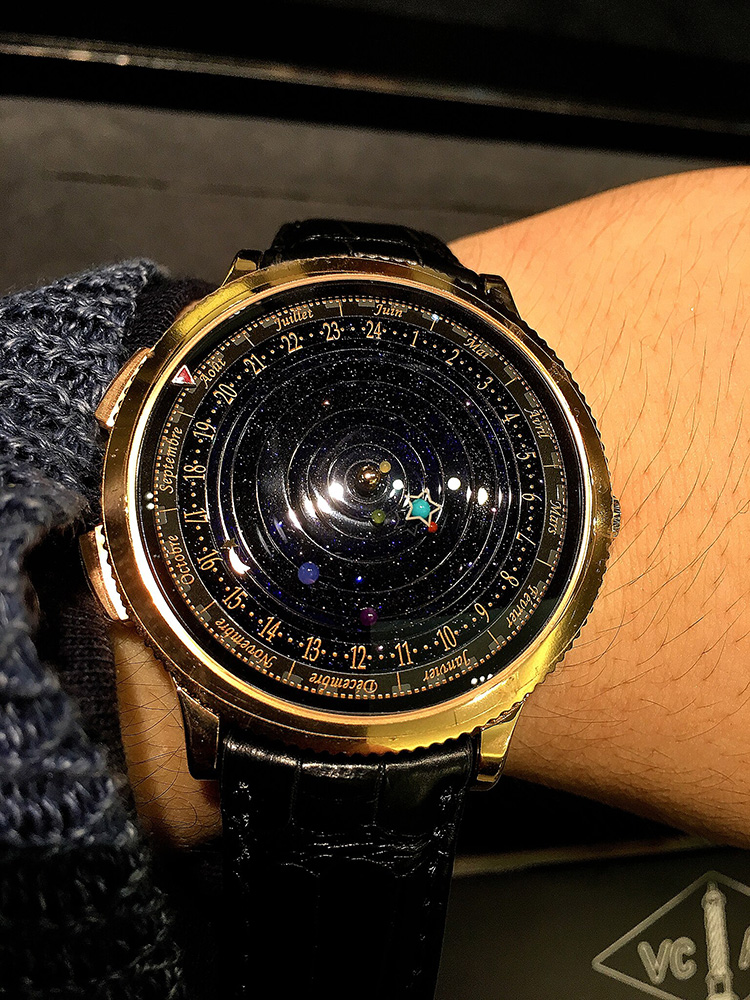
. . . which shows the positions of the planets and the time on a 24 hour ring near the edge of the dial but has no conventional hour or minute hands.
And our own unique time-display based on a fundamental ancient horological system which I’ll tell you about below.
Why are watches the way they are?
The story of how watches evolved through their history is complex and involves a continual interplay between engineering and marketing (with influences from fine jewellery). I include a brief summary here. If you want more details on the evolution of watches, see my article The Evolution of the Watch, and the Factors Behind its Development.
Watches began as a miniaturized version of mechanical clocks,
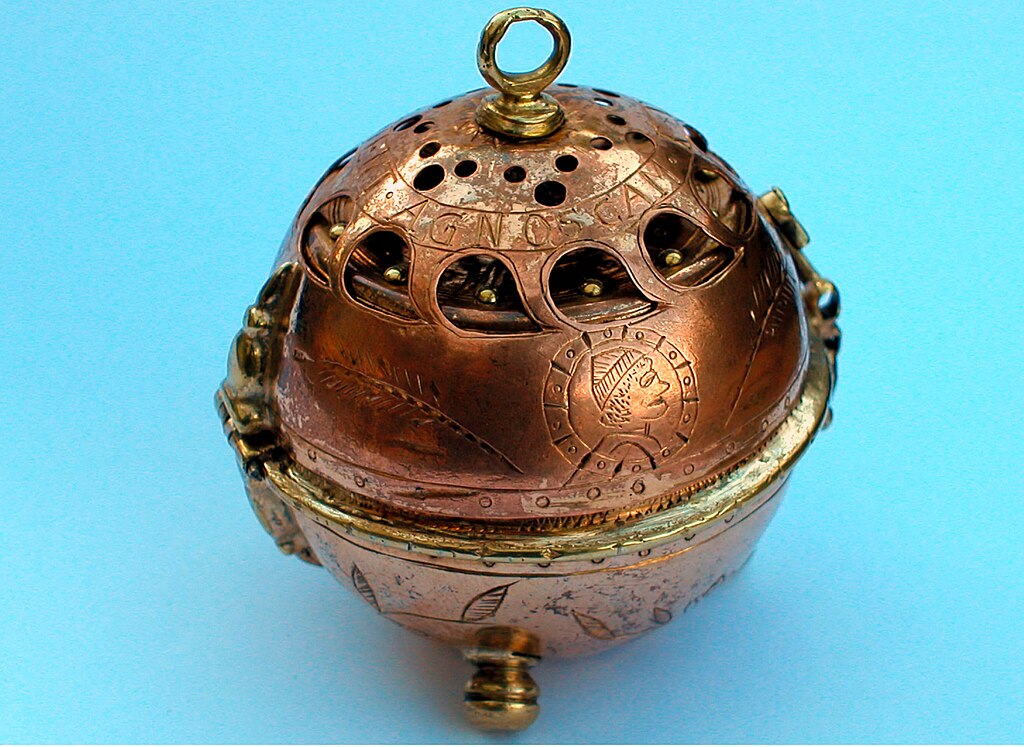
. . . initially as large pocket watches for men or smaller but very inaccurate decorative arm or wrist-worn pieces for women. Practical pocket-watches were used by men, with Peter Henlein in Germany often credited with some of the earliest portable spring‑driven clocks around 1500 which were worn around the neck. In the late 17th century King Charles II of England popularized waistcoats which had pockets specifically for timepieces, after which pocket watches became common as others copied the king’s style.
Men’s pocket-watches began being worn on the wrist for rapid time-telling in challenging conditions towards the end of the first world war.
The main influence on the development of the watch through most of its history, whether it’s a minor variation on existing timepieces or a radically different-looking watch, was the engineering involved in tracking and displaying the time, combined with practical considerations of its use.
The secondary influence on watch aesthetics was fine jewellery:
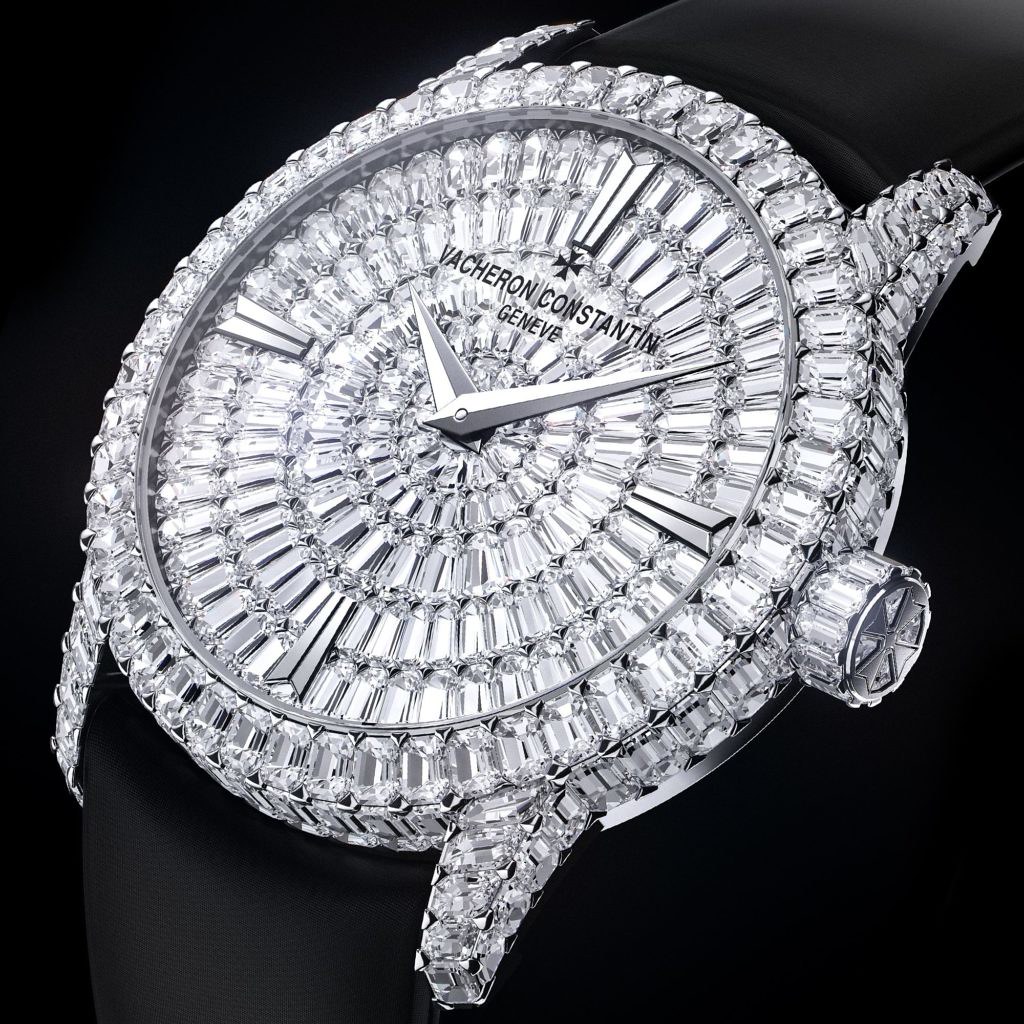
Watches were only available for wealthy people until the mass-produced watches became commonly available in the 1850’s, including those from the Waltham Watch Company (a Waltham watch is shown below).
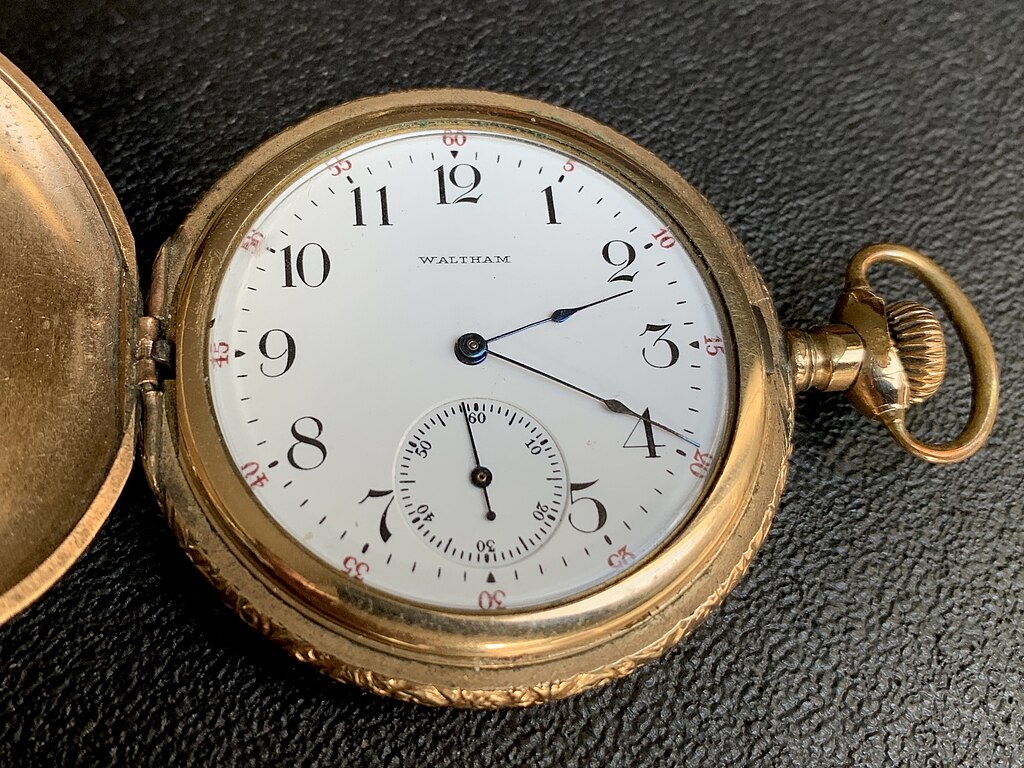
Watches before that time often used expensive materials (such as the precious metals and gemstones which are the “fine” referred to in the term “fine jewellery”) and often included decoration.
After inexpensive, practical watches became available thanks to the industrial revolution, most high-end watches chose to become more obviously different to these practical items, needing to clearly demonstrate their higher status, materials and craftsmanship. After the quartz crisis (in the 1970’s), the common polarization between inexpensive practical items and expensive luxury choices became even stronger.
The general layout of watches started evolving from that of small clocks, with early examples often being spherical or cylindrical.
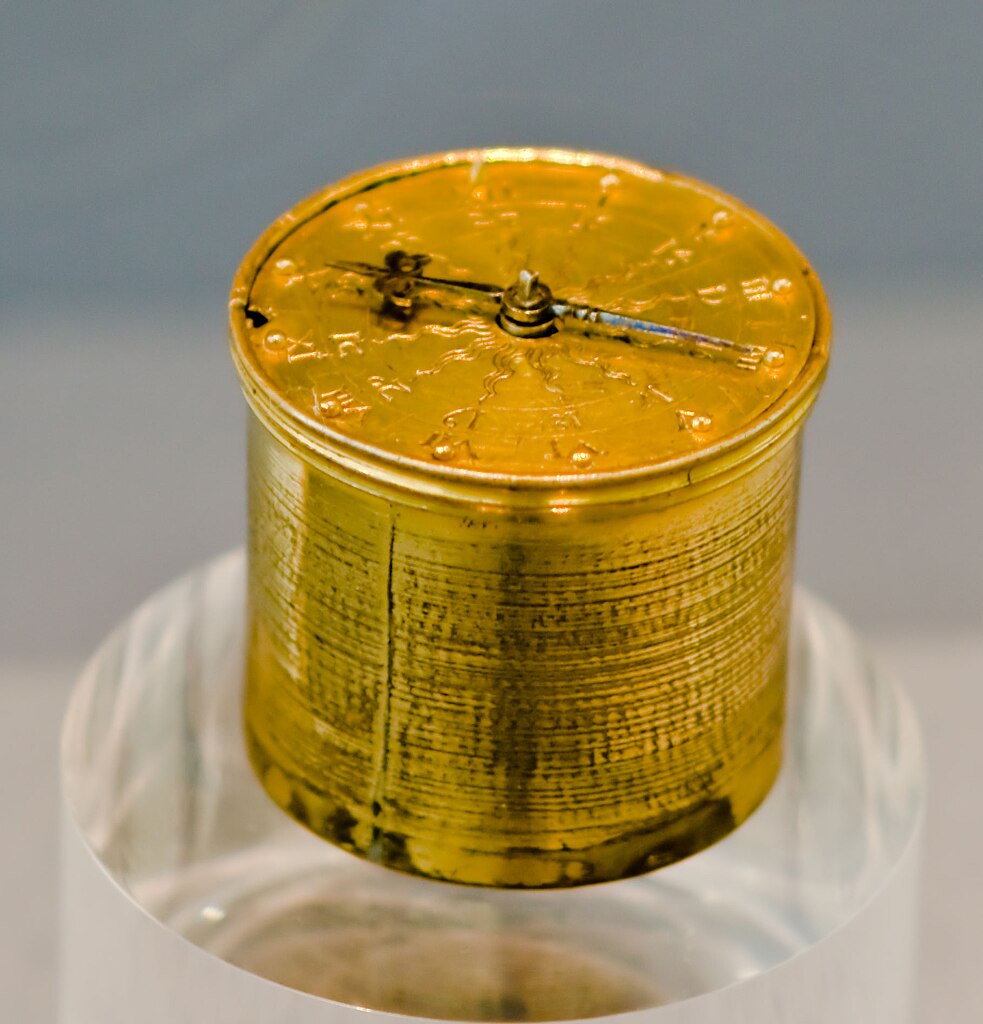
Pocket watches evolved into the common disc shape with rounded edges so they didn’t damage clothing, then began to be worn on the wrist towards the end of the first world war, for ease of use in challenging conditions.
The basic watch concept which is by far the most common today, with the watch worn on the left wrist with a crown at the 3 o’clock position, originated with watches including the Cartier Santos (below), designed for the pilot of that name to use while performing complex manoeuvres in the air.
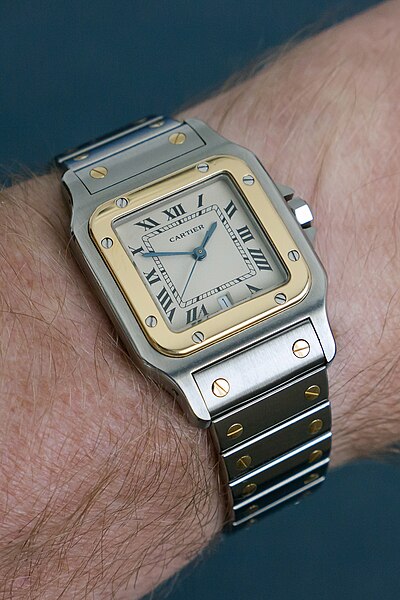
The main aesthetic influences of almost all watches today (apart from our own, below), even the most unusual or radical looking watches, are still coming from the engineering involved in tracking and displaying the time (whether mechanical or electronic), along with fine jewellery and related decorative elements.
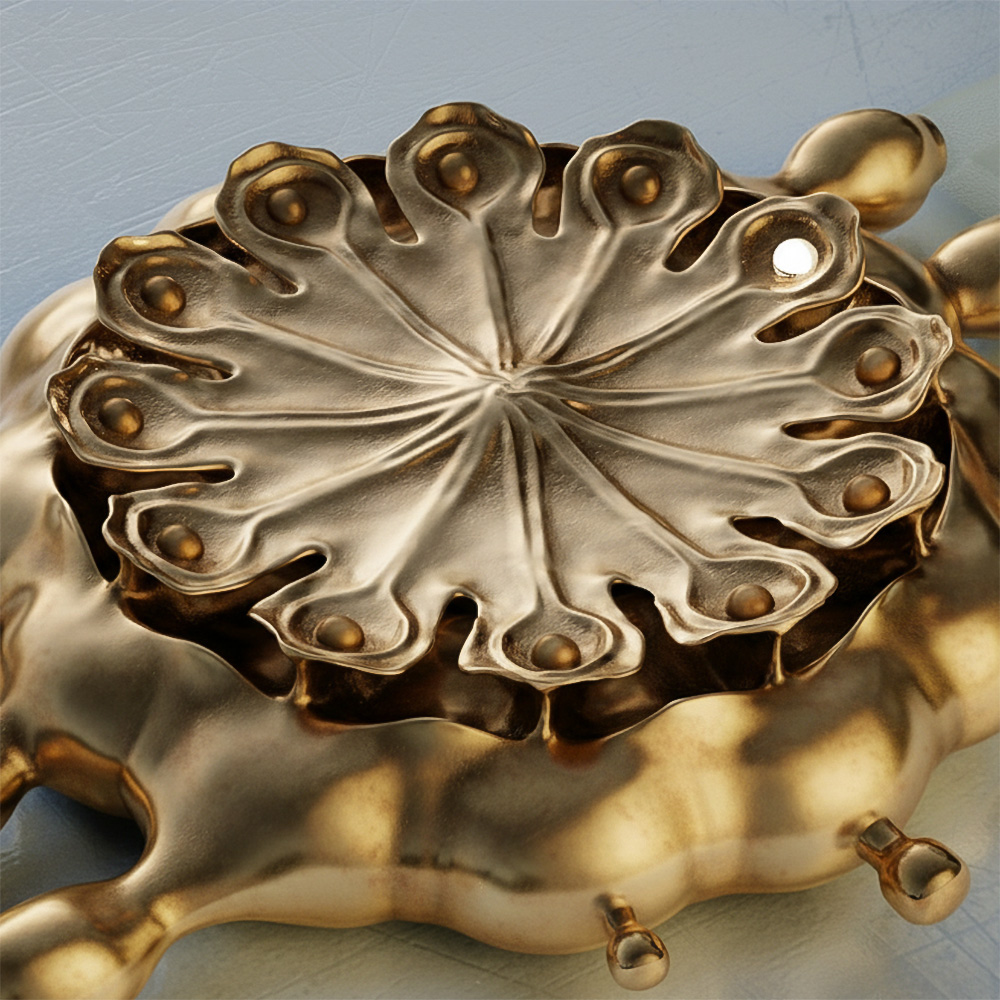
A degree of what can be seen as art jewellery influence is now seen in some watches, although this is usually not understood as such. Our own watches are not just influenced by art-jewellery, they are fundamentally based on fine art and conceptual art jewellery (instead of engineering and fine jewellery as other watches are), as is probably obvious when you look at them:
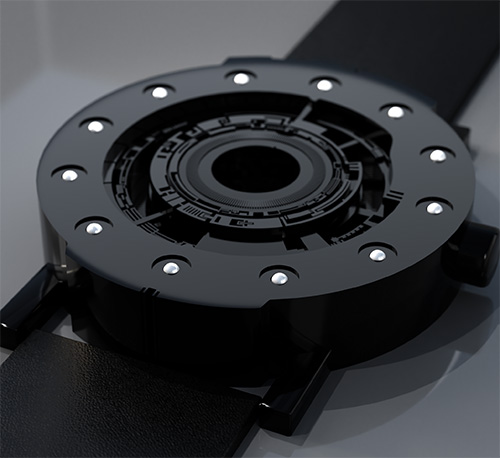
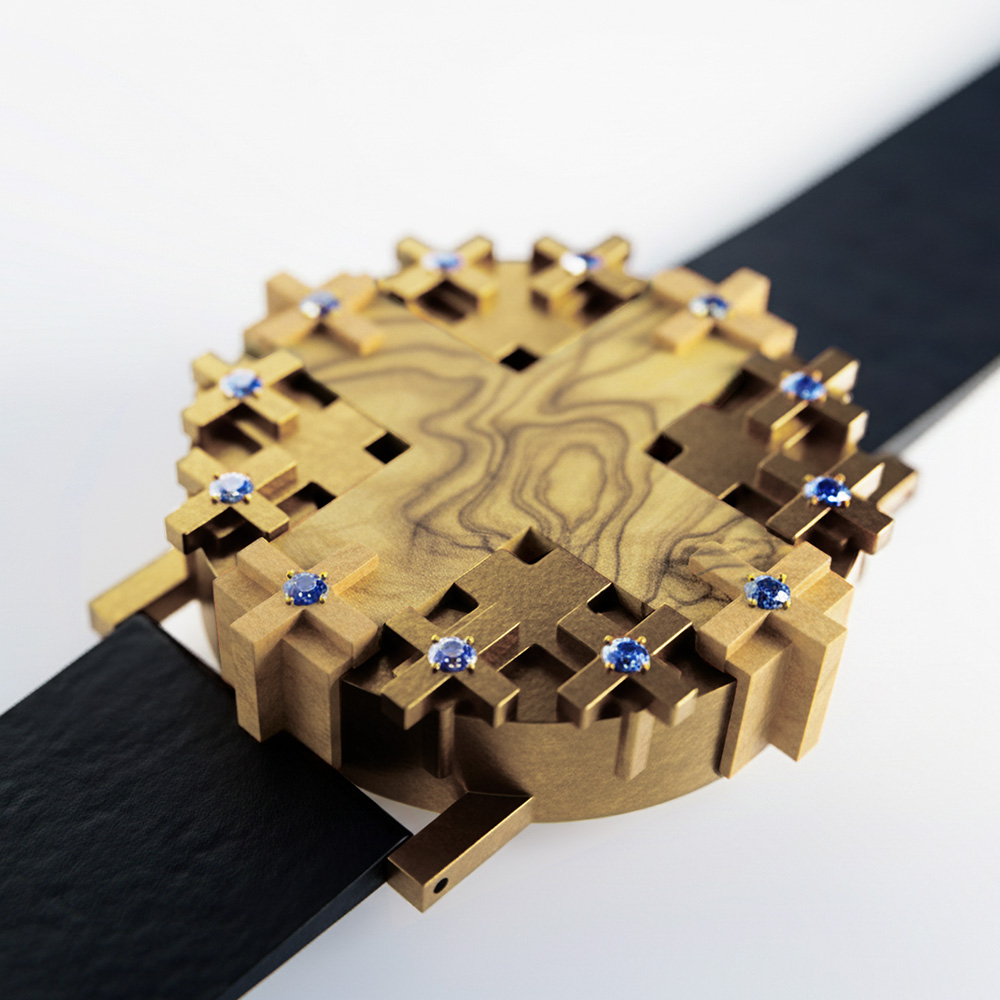
If you’re interested in our watches . . . subscribe to our Priority-list to receive notifications.
Here is a summary of the differences between fine jewellery and art jewellery:
Comparison of fine jewellery with art jewellery:
| Fine Jewellery: | Art Jewellery: |
| materials: precious metals, precious gemstones | can include any material |
| simple symbolized forms | can include complex forms (organic, broken, fractal etc.) |
| highly polished surfaces | surfaces can be complex, rough, organic, broken, fractal etc. |
| design | some sub-categories (including conceptual-art-jewellery) are art |
| symbolized, polished, decorated & decorative | can use materials, forms and surfaces as what they are |
| valued by materials and brand | valued as art |
As with most evolutionary developments, while fine jewellery and art jewellery have different properties, the differences between the two are sometimes more of a spectrum of degrees rather than always being an absolute distinction, and the two can sometimes be combined in a single piece.
For more details on this fascinating evolution from fine jewellery to art jewellery, read my article here.
These cultural references from the history of watch development provide the context in which any new watch is designed and seen.
From Concept to Wrist: How a New Watch is Usually Designed and Made.
Starting points and influences.
This section of this article is about how most watches are made. This lays the foundation for understanding how and why the creation of our own watches is so different, being based on an ancient horological principle working in conjunction with genuine artistic creativity rather than being based on the watchmaking concepts and influences used by most timepieces.
Designing and producing a new watch is a fascinating process that blends creativity, engineering, and craftsmanship.
Overall design philosophies and approaches.
Designing a watch cannot be done entirely “from scratch” in conceptual terms, because anyone designing a watch inevitably already has a vast array of relevant background and influences, whether they know it or not. Even if the designer chooses to deliberately ignore or do the opposite of some of those influences, an unusual watch can only be designed, and seen, in the context of existing watches.
For example, the watches mentioned above which don’t display the time are only considered “unusual” in the context of the existing cultural references about what a watch is usually.
From the vast array of existing influences, different watch brands place emphasis on different criteria to determine their watch design. In my opinion it is ideal to have a clear understanding of the philosophies that are affecting one’s functional and aesthetic choices near the beginning of the process of designing a new watch, because they help inform and clarify the details which should relate to those choices and the interactions between the various aspects of the design.
It can be said that one of the most important principles of effective design is that all the elements of the design should be working together optimally.
Design influences include:
Aesthetic watch-design philosophies . . .
. . . emphasize visual form, beauty, and emotional impact, such as these visual influences and conceptual philosophies from significant art movements:
Minimalism: Focus on simplicity and clean lines (e.g., Nomos, Junghans (below)).
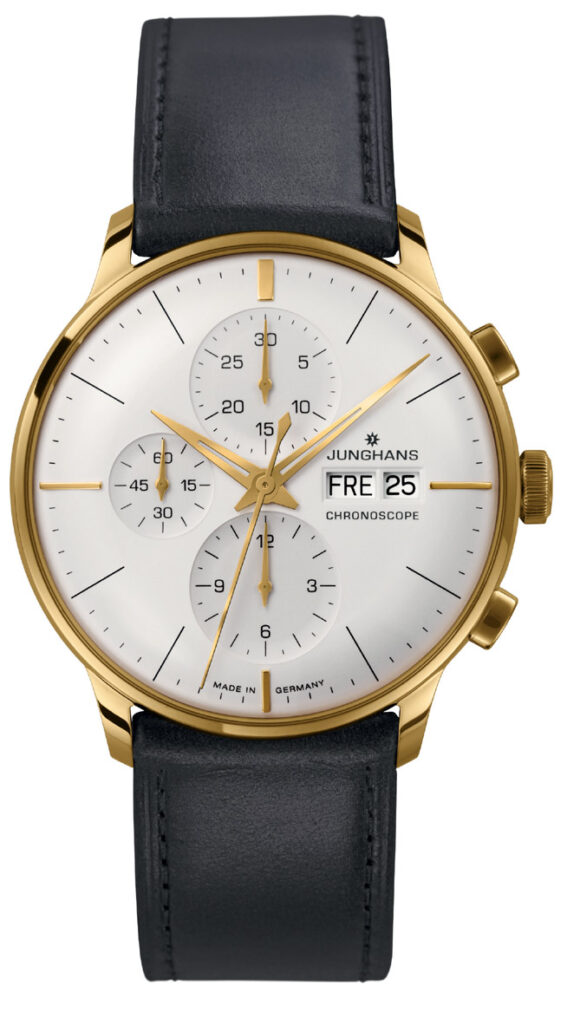
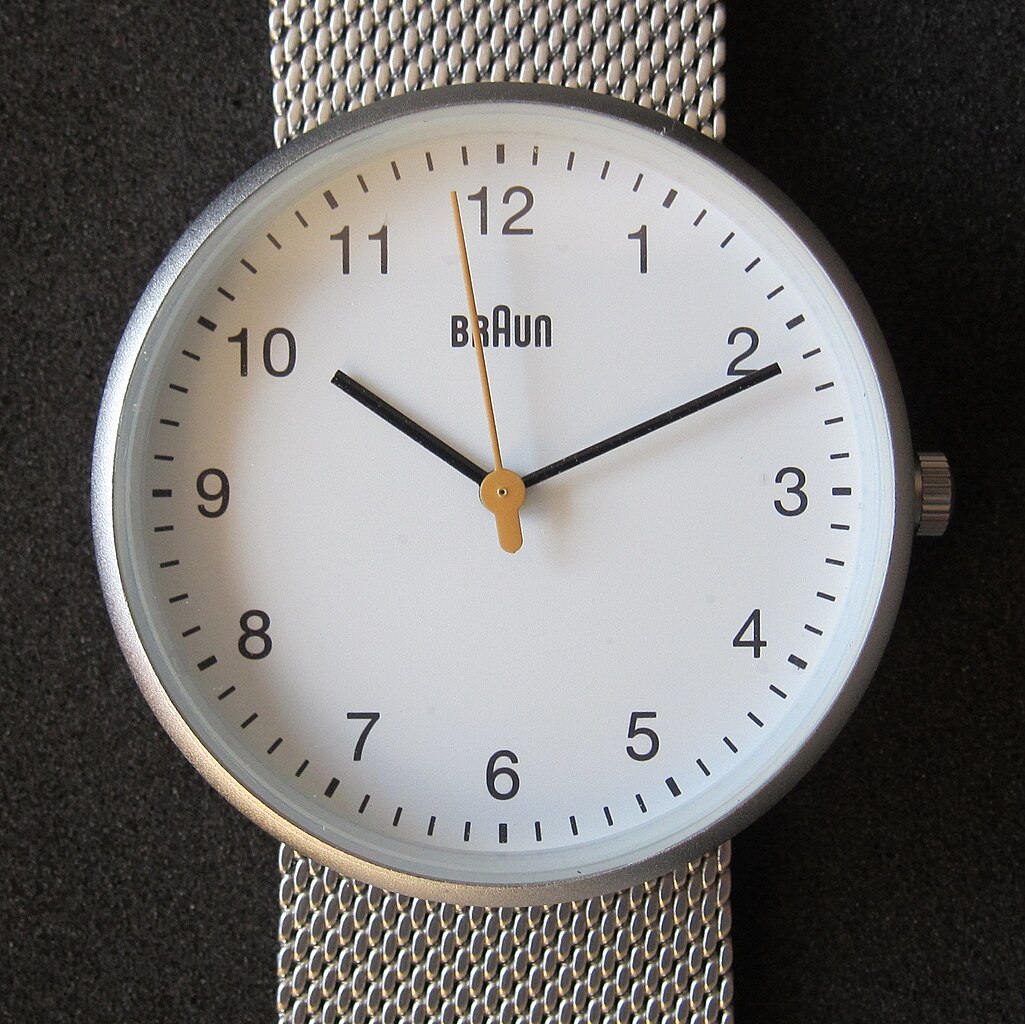
Bauhaus: Functional (form follows function), utilitarian, geometric (e.g., Braun (below), early Junghans, Ochs & Junior).
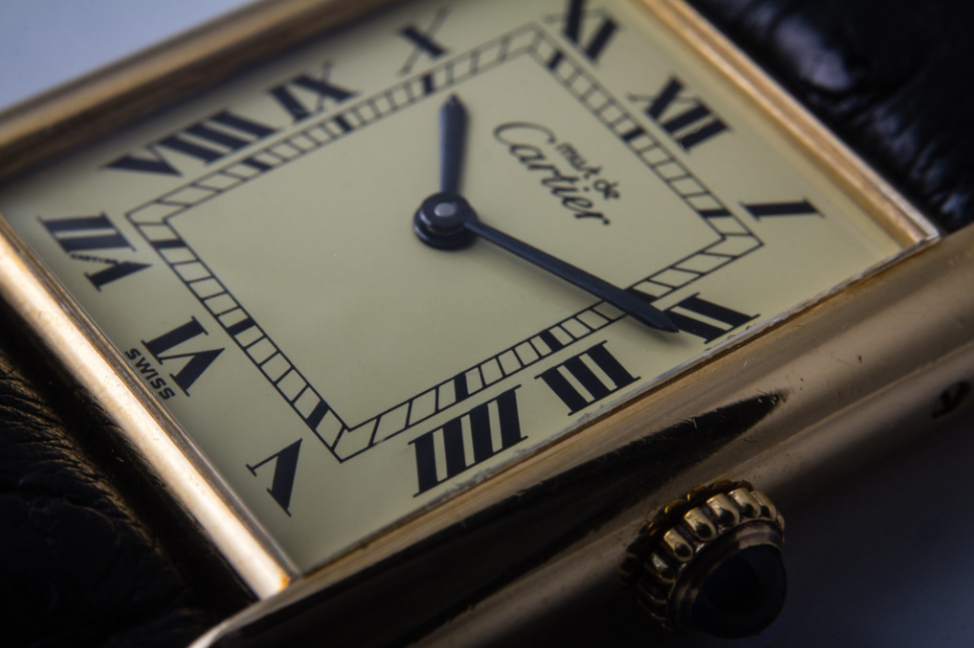
Art Deco: Bold geometry, symmetry, luxurious materials (e.g., Cartier Tank, below):
Modernism: Breaking tradition, embracing contemporary form and abstraction.
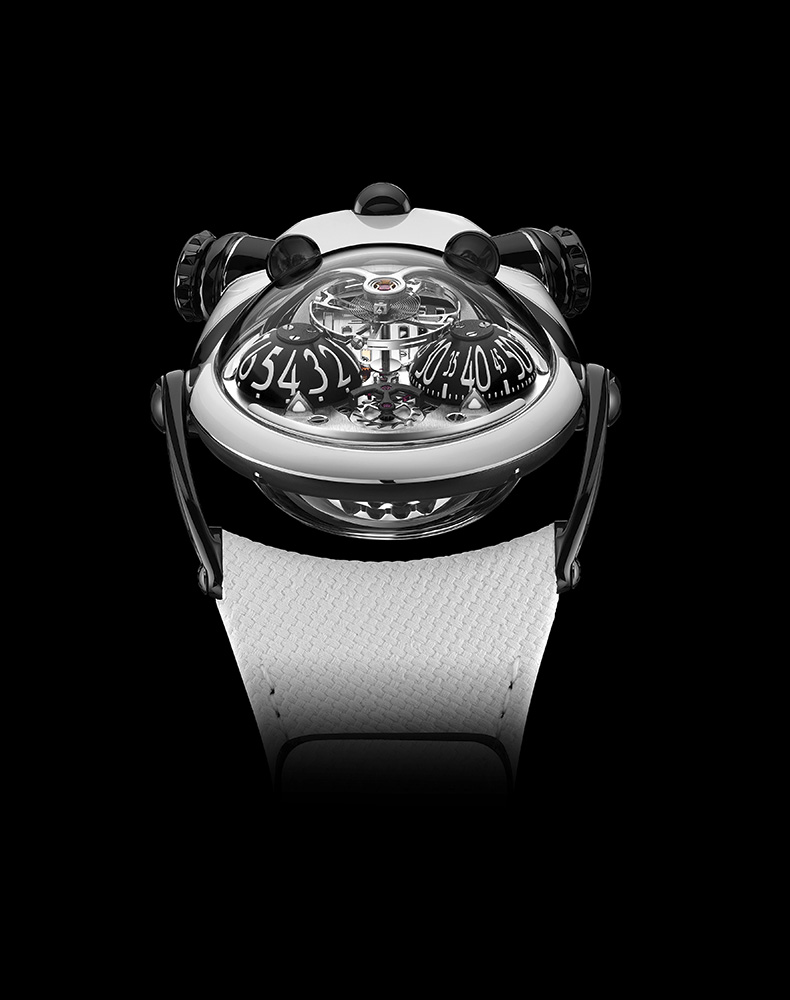
Avant-Garde: Radical experimentation (e.g., Urwerk, MB&F (below), as well as our own watches).
Classicism: Traditional, conservative styling rooted in historical forms.
Functional design criteria . . .
. . . include practical and technical considerations, such as:
Legibility: Easy-to-read dials, hands, and markers.
Ergonomics: Comfort on the wrist, usability of crowns and pushers.
Durability: Shock resistance, scratch resistance, robust case materials.
Water Resistance: Designed for swimming, diving, or daily wear.
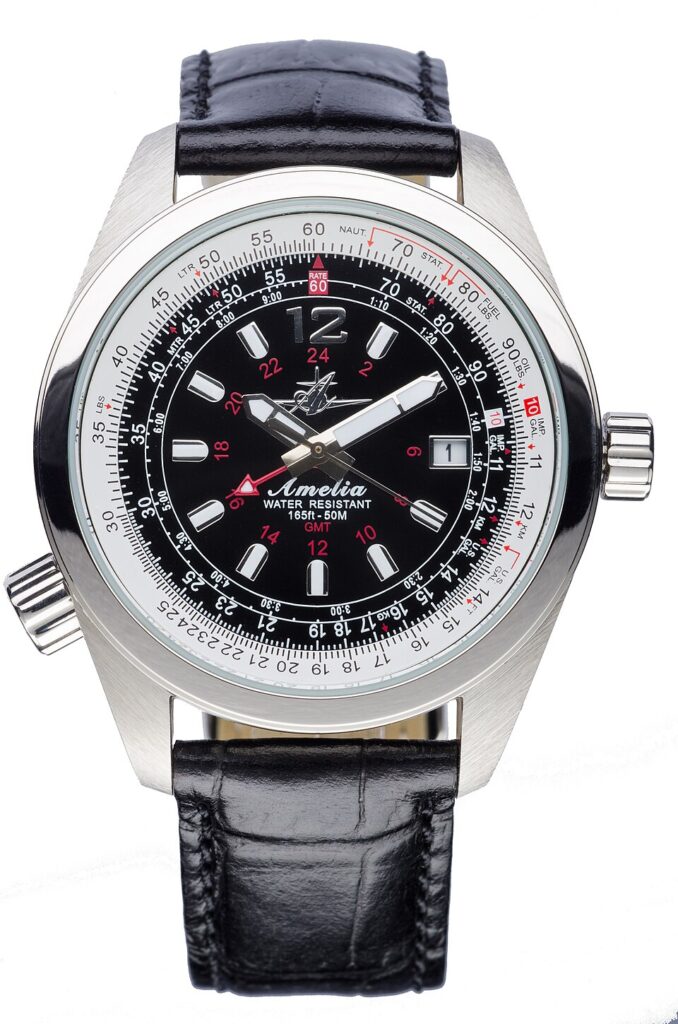
Tool Watch Functionality: Designed for specific tasks (e.g., GMT, diving, aviation (like Abingdon Co (below) who make watches for adventurous women).
Serviceability: Ease of repair or maintenance.
Technological innovation . . .
. . . includes influences from materials science, engineering, and advancements in horology:
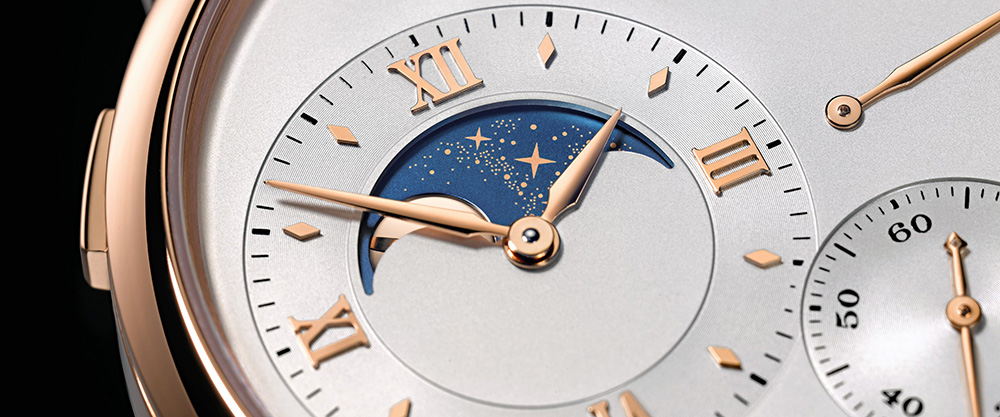
Mechanical Mastery: Focus on high complication (e.g., perpetual calendars or moonphase such as the Lange-Soehne below).
Quartz Precision: Emphasis on accuracy and low maintenance.
Smart Integration: Combining traditional design with smart tech (e.g., hybrid watches).
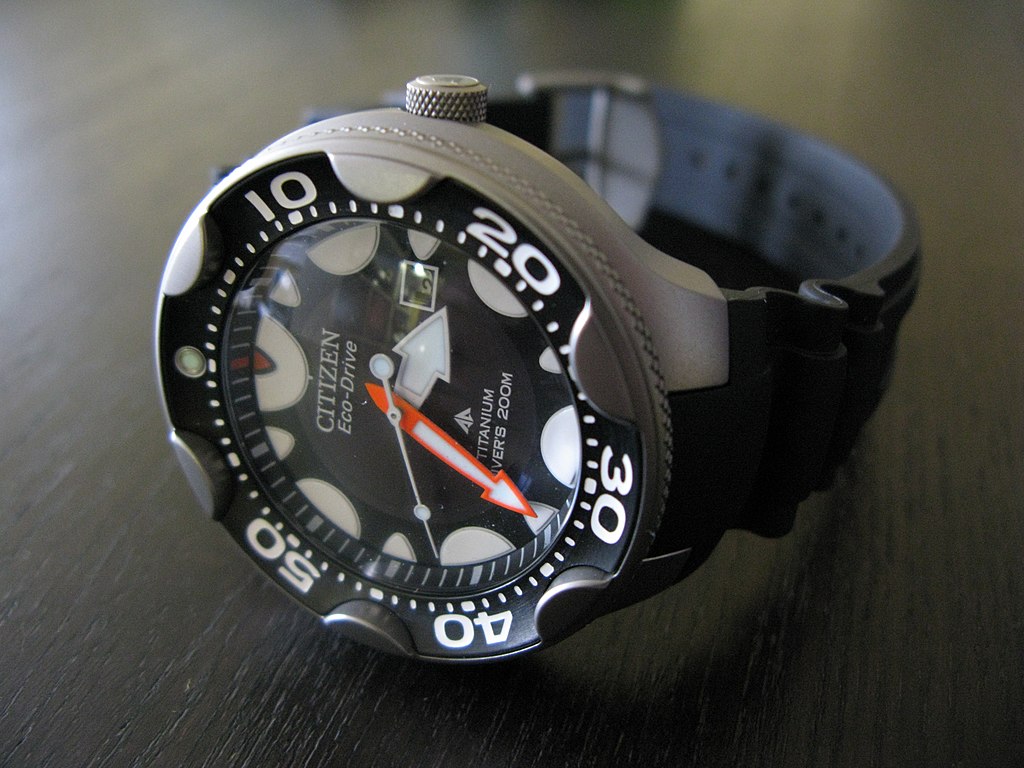
Material Innovation: Use of ceramic, carbon fibre, titanium (like the Citizen watch below), sapphire, etc.
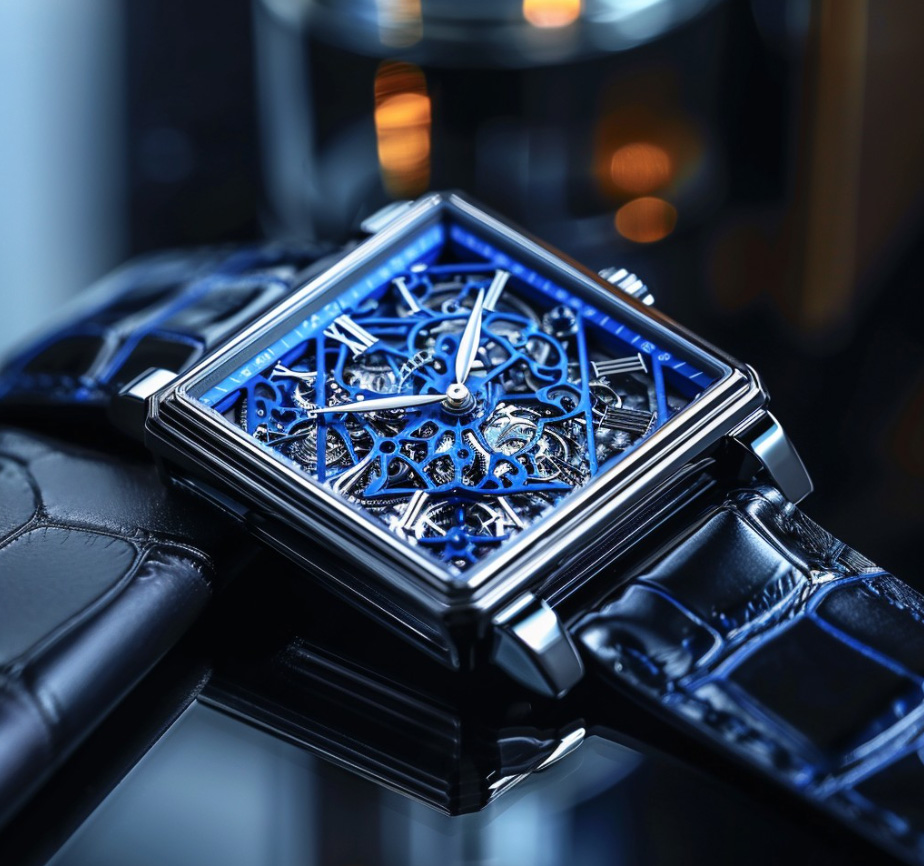
Movement Display: Skeletonization to showcase mechanics (below).
Cultural & historical influences . . .
. . . include heritage and storytelling elements.
Heritage Reissues: Reviving vintage models with modern updates.
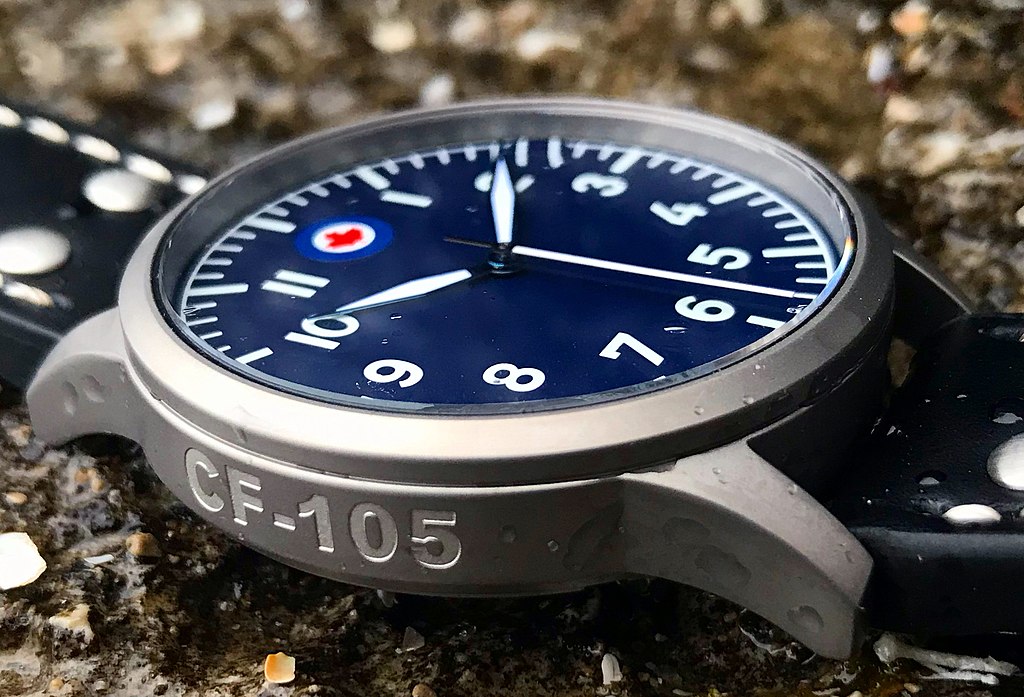
Military Influence: Based on field watches, pilot watches (such as the pilot watch by the Whitby Watch Co. below), etc.
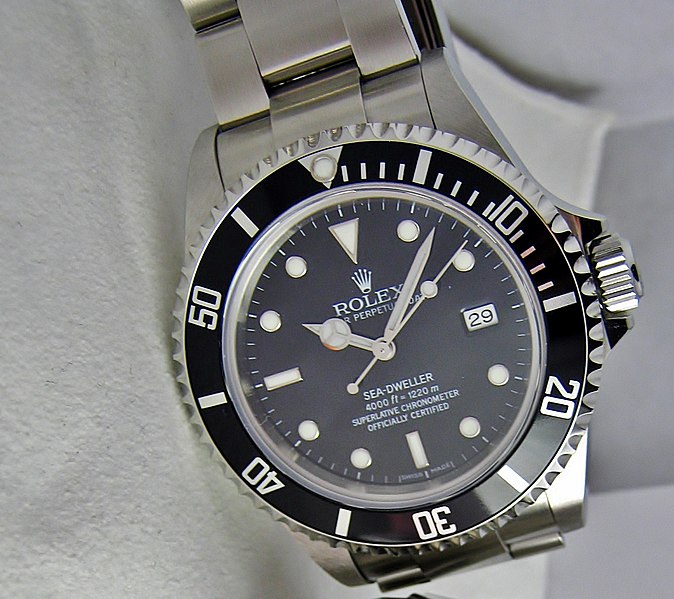
Racing/Diving/Aviation Legacy: Functional cues from motor-sports or deep-sea use (such as the Rolex Sea Dweller deep sea dive watch below):
Cultural Symbolism: Integration of local design motifs or cultural meanings.
Brand DNA: Designs consistent with a brand’s historical identity.
Luxury & prestige influences . . .
. . . are driven by status, exclusivity, and craftsmanship.
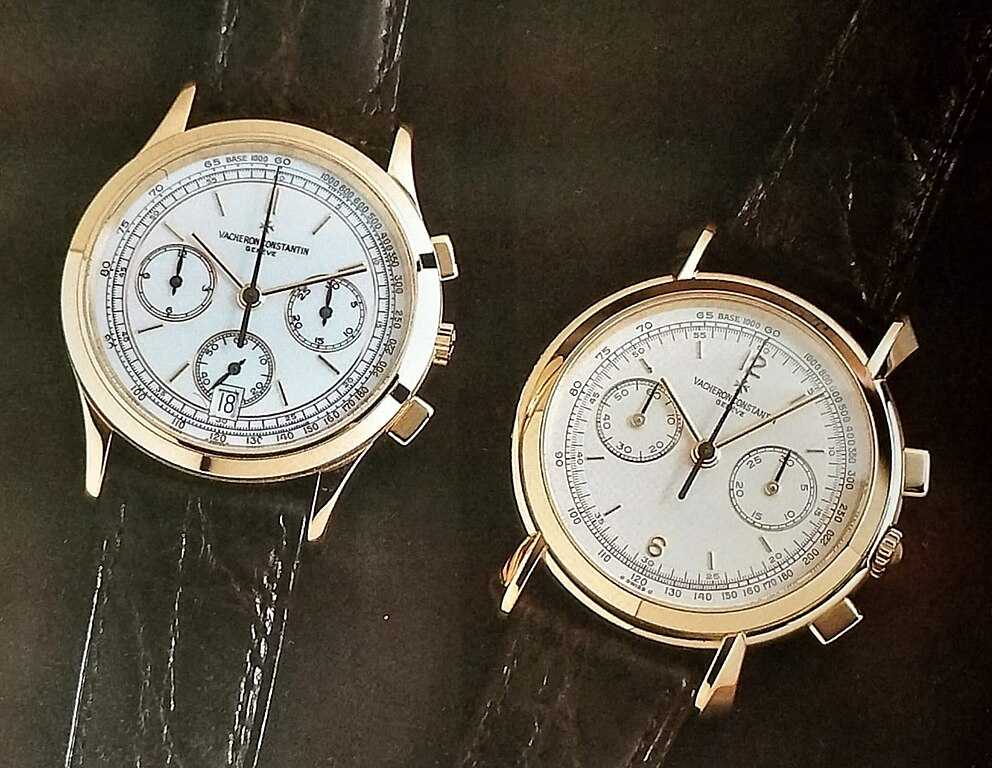
Haute Horlogerie: Emphasis on handcrafted complications and finishing (e.g., Patek Philippe, Vacheron Constantin (below)).
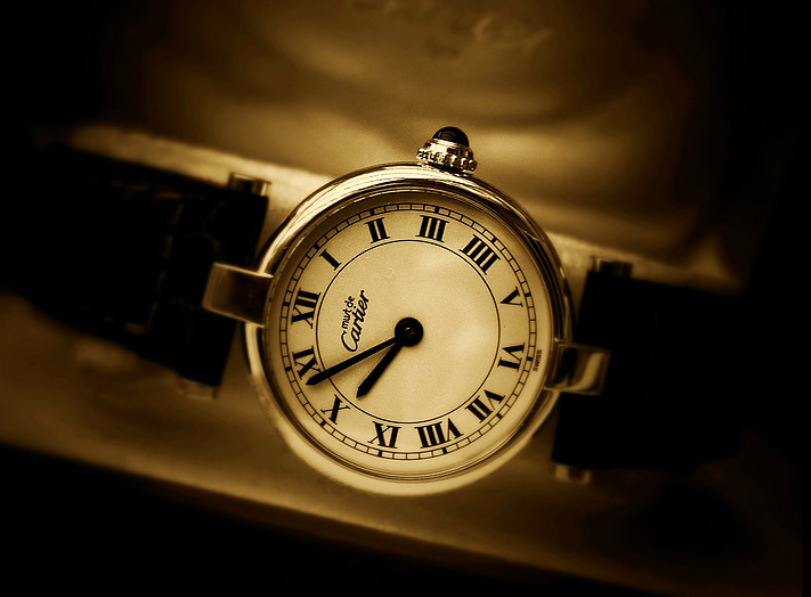
Fine-Jewelry-Driven Design: Gem-setting, precious metals, decorative techniques (e.g., Cartier (below), Chopard).
Limited Editions: Exclusivity as a design driver.
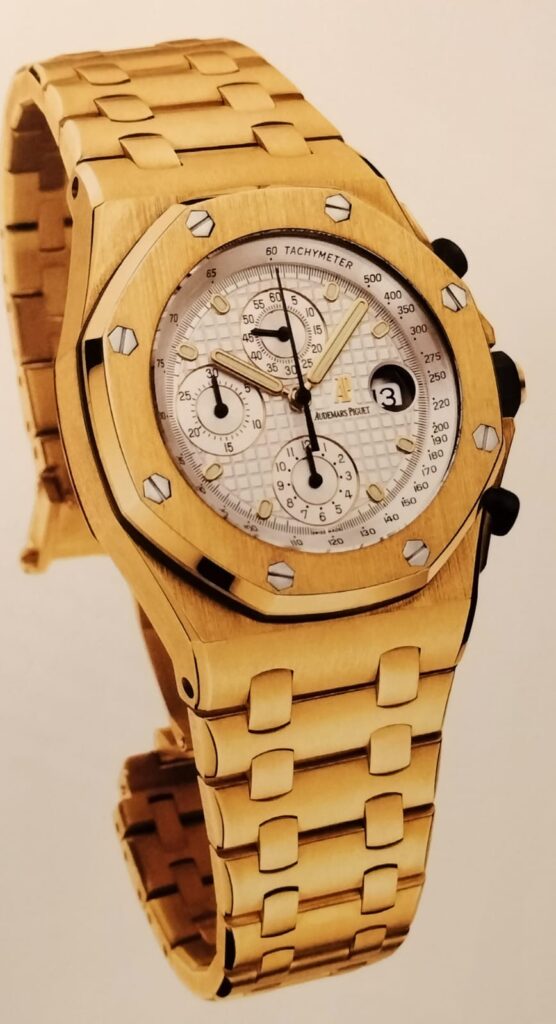
Iconic Status: Designing for recognizability (e.g., Rolex Submariner, Aaudemars Piguet Royal Oak (below)).
Market & consumer trends
Gender-Specific Design: Differentiating by size, colour, and styling.
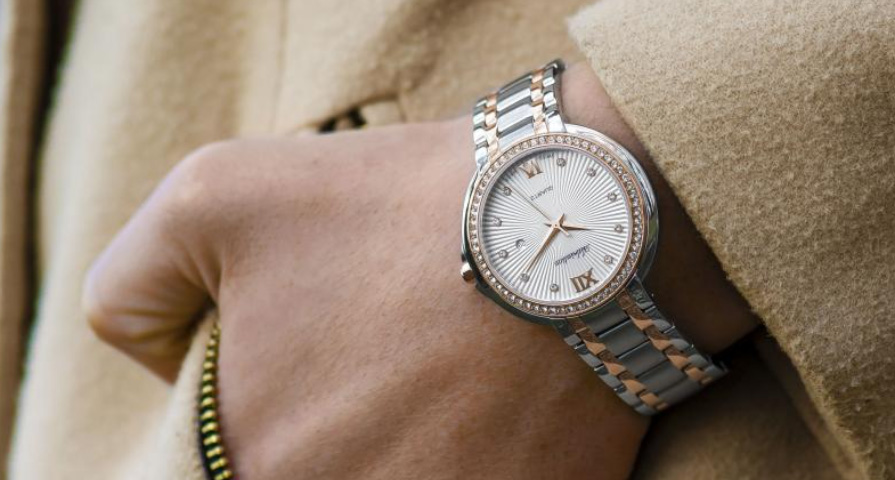
Fashion Collaboration: Influence from fashion houses (e.g., Gucci, Dior).
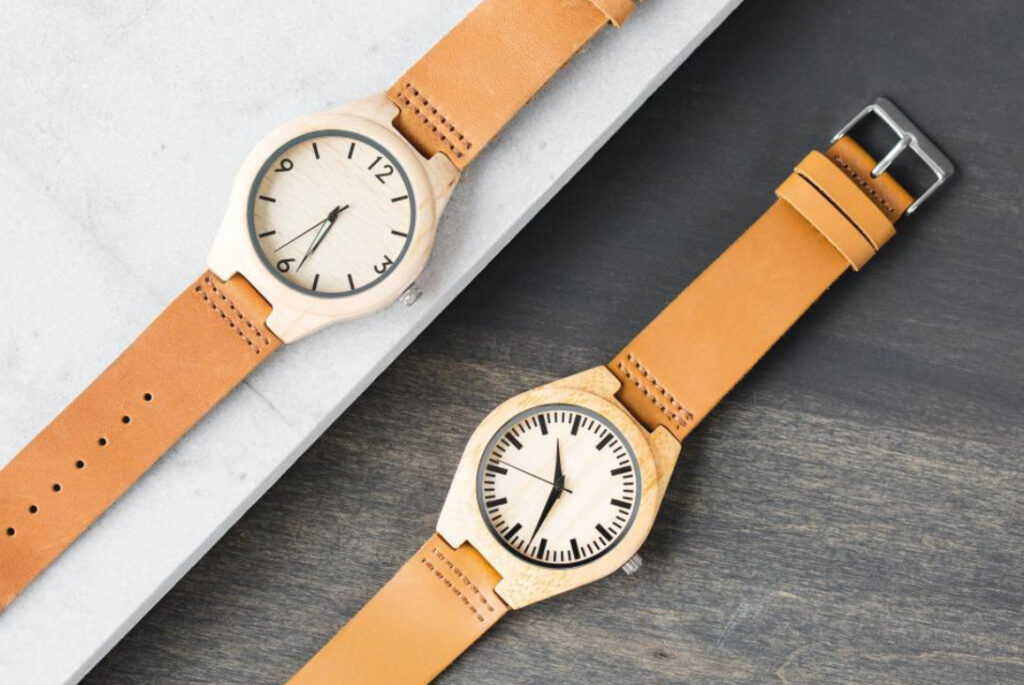
Sustainability: Eco-conscious materials and manufacturing such as the wood watches below.
Customization: Mod-friendly or bespoke designs.
Affordability vs. Prestige Balance: Designed for accessibility or high-end appeal.
Conceptual & philosophical movements . . .
. . . include deeper design ideologies, such as:
Form Follows Function: Rooted in functionalism, often linked with Bauhaus.
Emotional Design: Creating sentimental or emotional connections (e.g., heirloom watches).
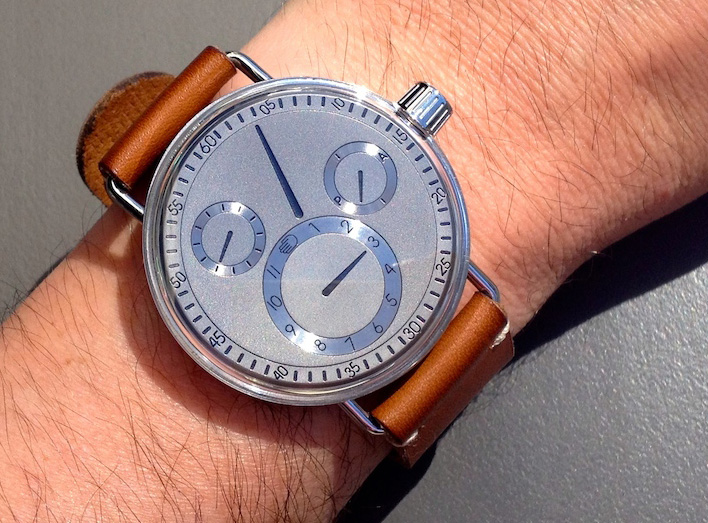
Disruptive Design: Challenging conventions (e.g., Ressence (below), HYT’s fluidic display).
Narrative-Driven: Storytelling through design (e.g., watches incorporating salvaged materials like rusted steel from the Titanic, or moon dust).
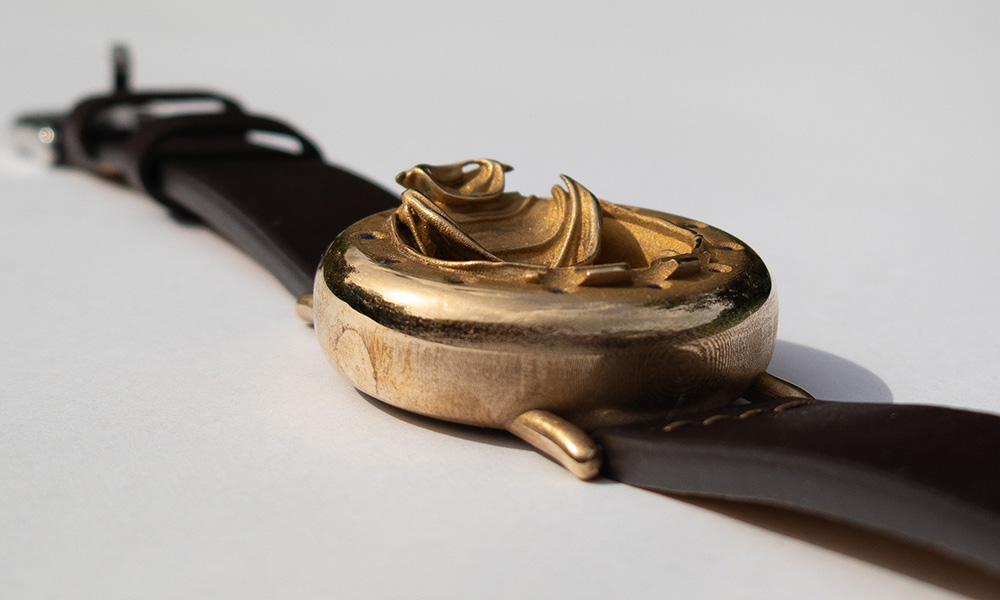
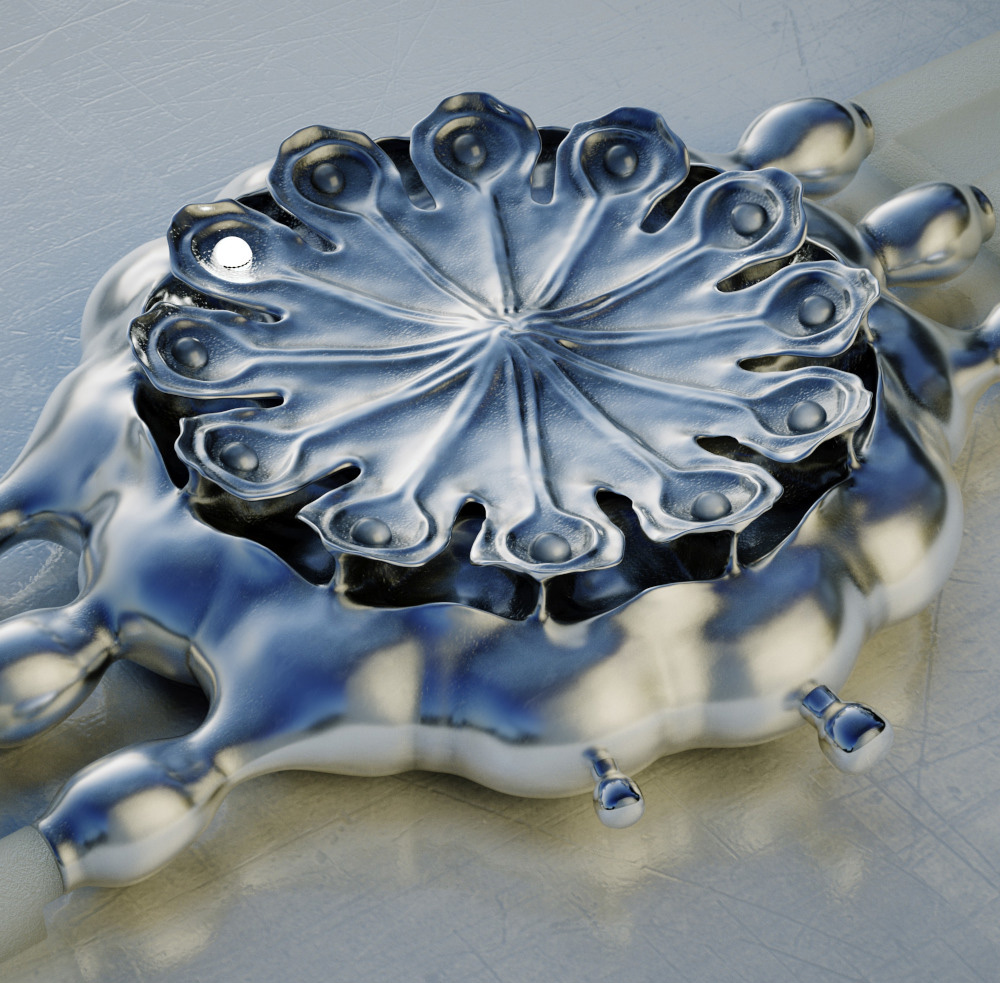
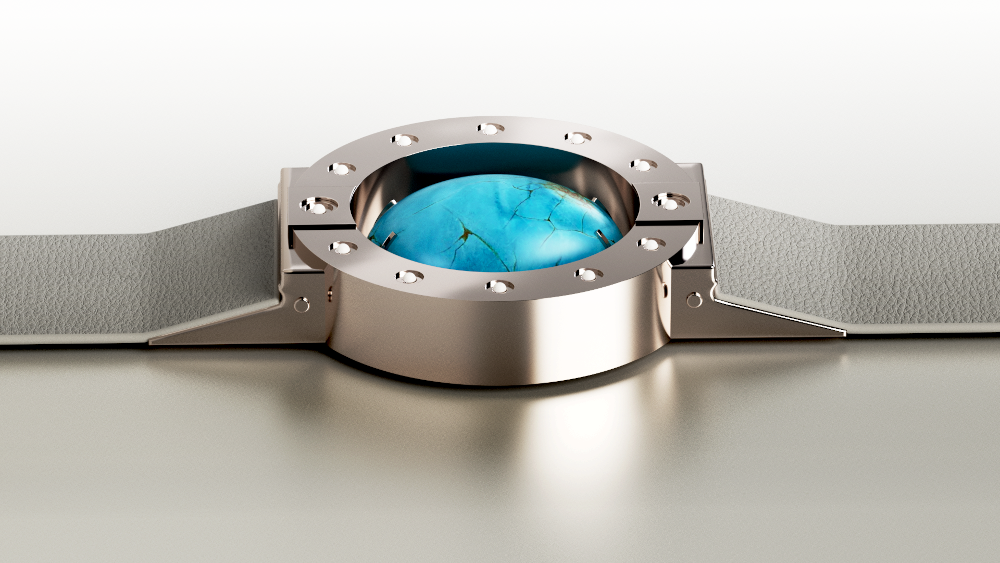
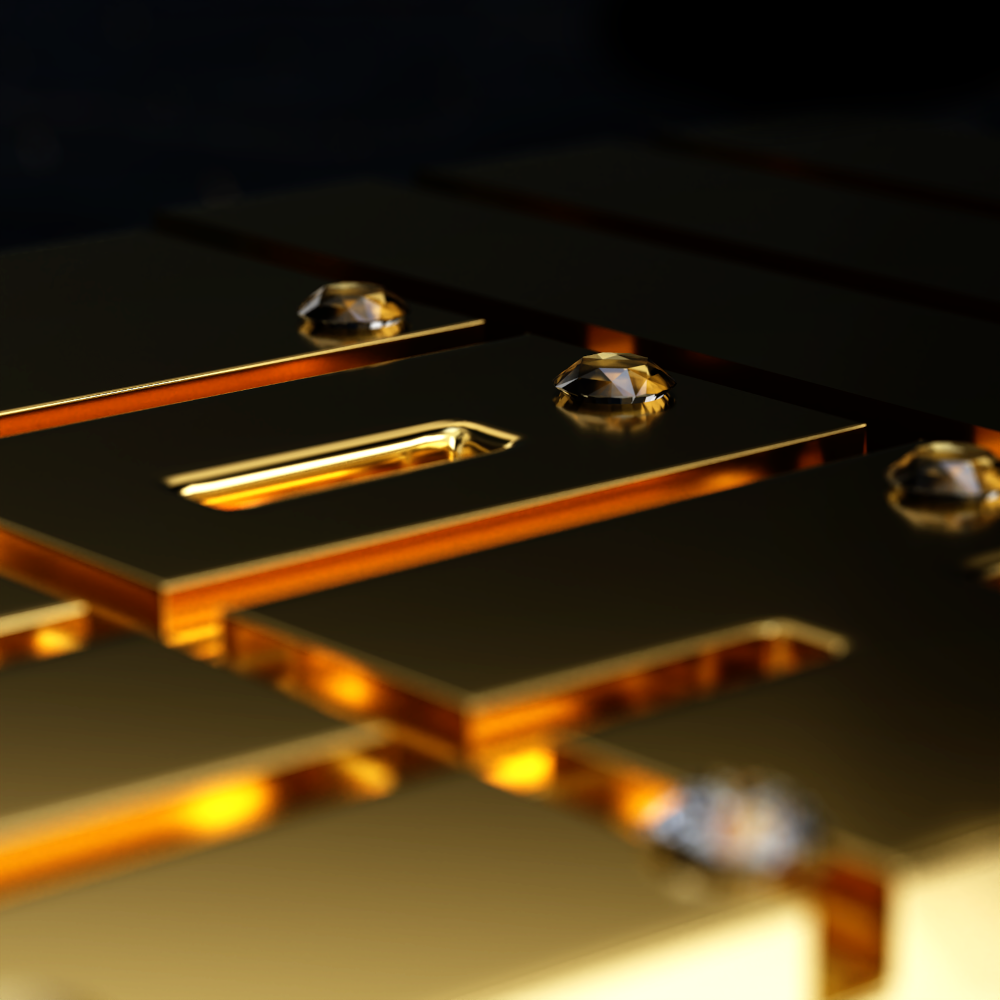
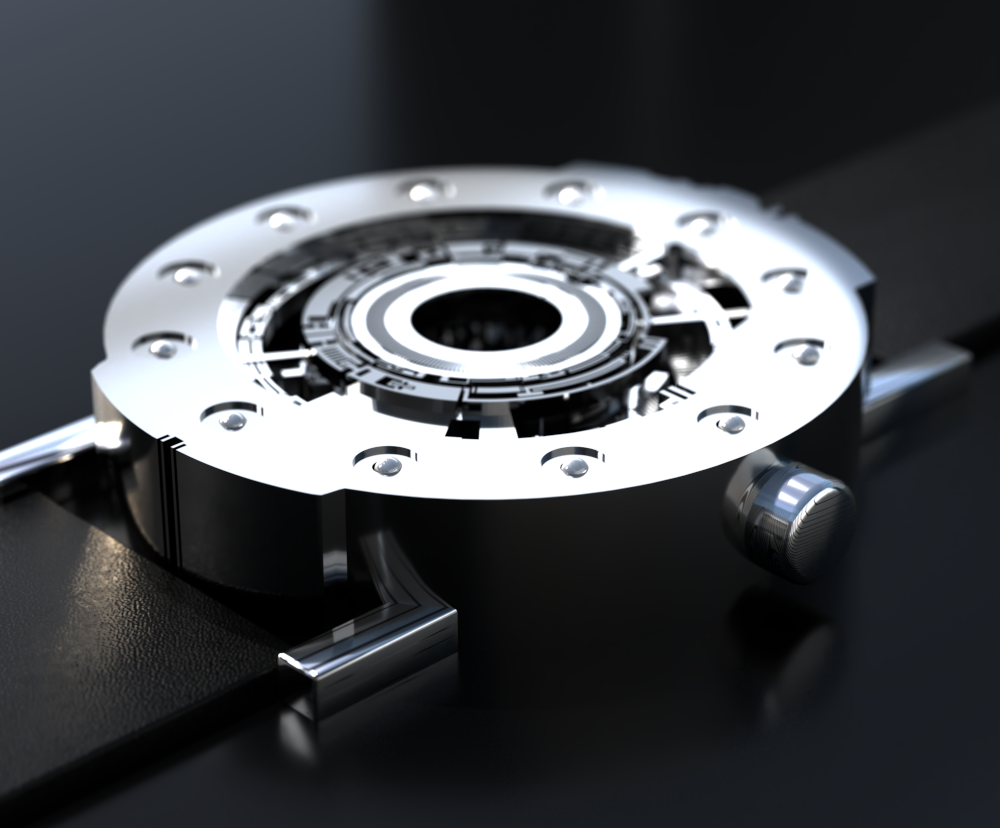
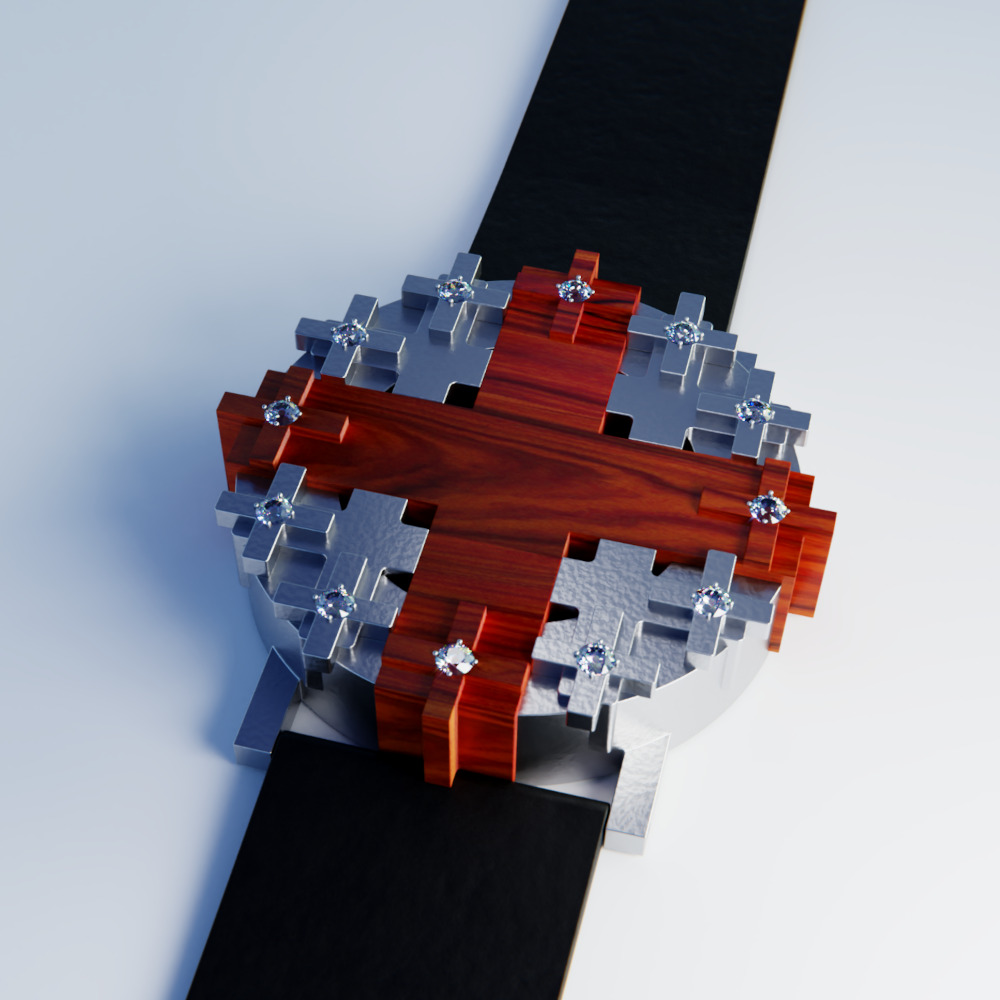
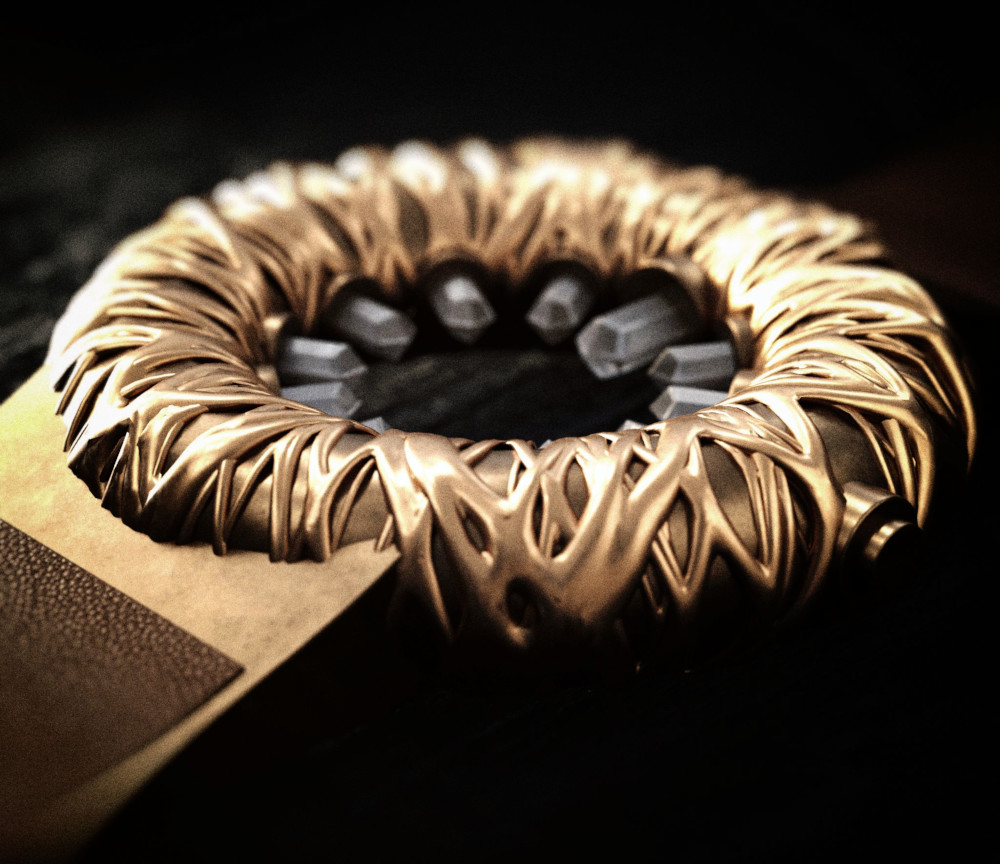
Art-based watches: our own UnconstrainedTime watches seem to me to fit the generally agreed definitions of art far more fully than any other watches we are aware of, instead of being based on engineering and fine jewellery like almost all other watches (even the few which have art added to the dial):
If you’re interested in our watches, make sure you don’t miss our launches . . . subscribe to our Priority-list right now.
Big brand vs. microbrand design philosophies.
The watch design process which results in the aesthetics of a new watch differs significantly depending on whether the timepiece is being made by a big brand or a microbrand.
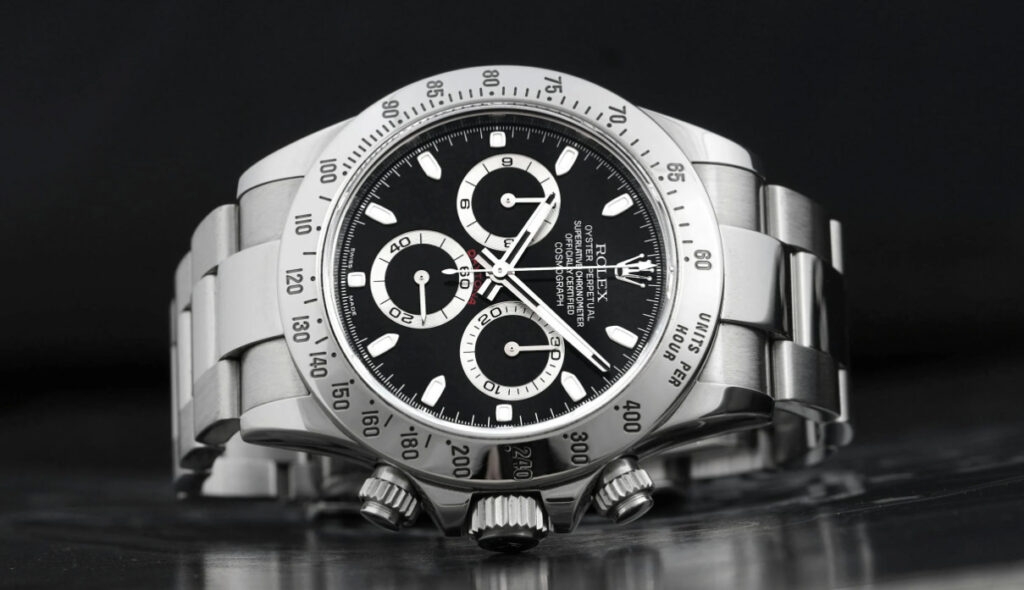
This is due to differences of aims and influences between the two.
Microbrands are often driven by a mix of personal passion, frustration with current watches, and niche opportunities. Microbrand founders are usually serious watch enthusiasts, working directly from their own passion and areas of interest, wanting to offer something different to their customer niche. They often love creative freedom and community involvement.
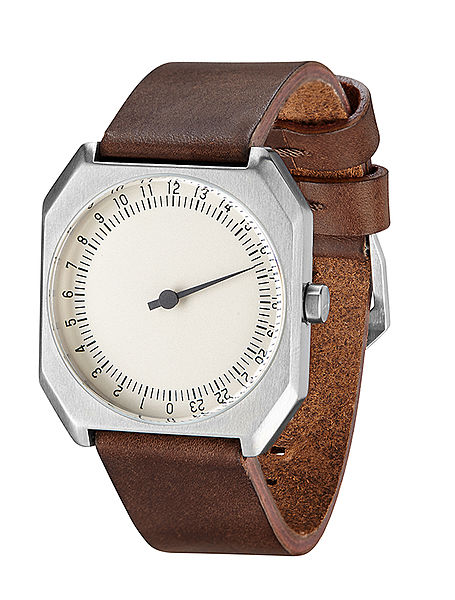
With the rise of crowdfunding and direct-to-consumer platforms, it’s easier than ever to test a niche idea and reach a global audience. Founders may identify a gap in the market—like dive watches with smaller case sizes, a pilot watch for women, or affordable GMTs—and build a brand to fill it.
While some microbrand founders are focused on profit, and some of the others make watches which are almost exact copies of existing designs, many create a brand to manifest their own vision of what a watch should be, into the world.
The design philosophy of big brands tends to be conservative and market-driven. Their designs are influenced by brand heritage, current trends, and mass-market appeal. Risk is minimized to protect brand identity and sales volume.
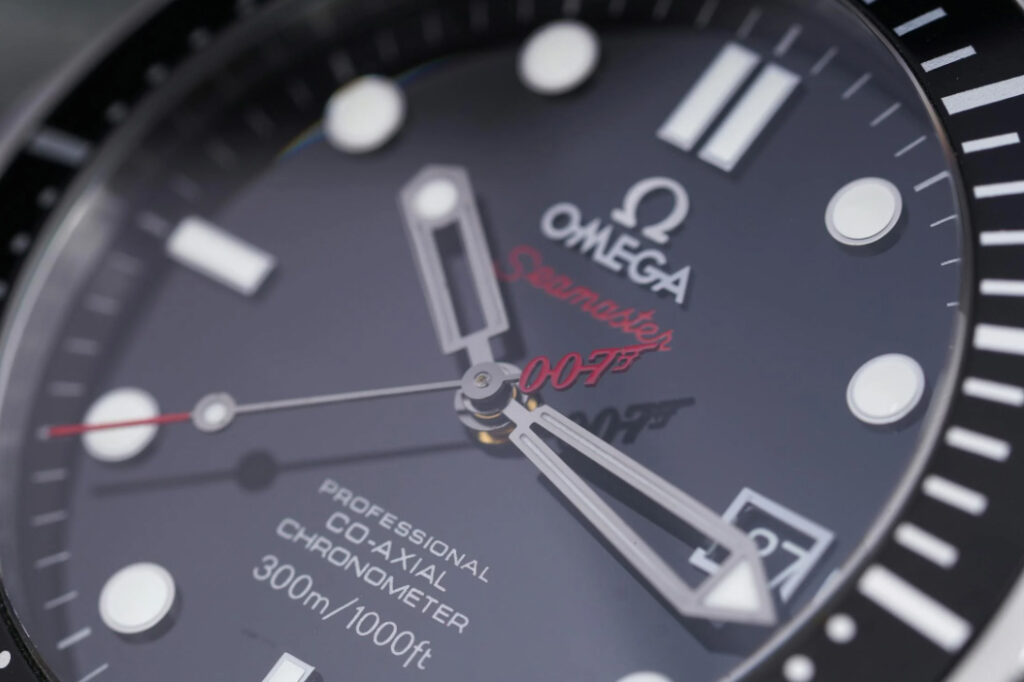
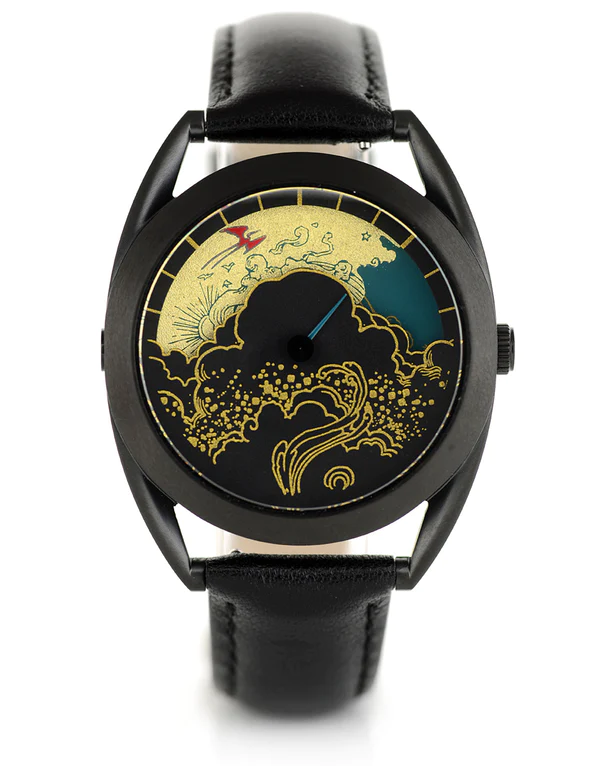
By comparison the design philosophy of microbrands can often be more experimental and personal (like our own UnconstrainedTime watches, details below). Designs often reflect the founder’s vision or respond to specific niche communities. Microbrands aren’t afraid to be bold, quirky, or vintage-inspired because they cater to a smaller niche of enthusiasts, not the masses. An example is the Mr. Jones Paper Crane watch (below):
Big brands can take 2–5 years to design a new watch, with multiple departments involved—marketing, R&D, legal, etc. and strict processes and approval stages. By contrast, microbrands often move much faster—sometimes developing from idea to prototype in under a year, with decisions being made by a small team (sometimes just one person), allowing for rapid iteration.
The resources and capabilities can differ between the two, with big brands often having access to in-house design teams, proprietary movements, and exclusive materials. Microbrands are more likely to rely on off-the-shelf components (like Miyota, Sellita, or Seiko movements), work with third-party suppliers, and can also outsource some elements of the design process. Custom parts are possible, but can be challenging to implement within tighter budgets—so creative problem-solving is key.
The degree of risk tolerance is different, with big brands typically avoiding polarizing designs, rarely introducing radically new concepts unless it’s safe (like in a limited edition), and every watch aligning with the brand’s image and broader product line-up.
By contrast, microbrands can afford to take risks such as bold colours, unusual case shapes, limited-run experiments—these are often the draw of microbrands. If it fails, they learn and move on with minimal financial damage. Having said that, some big brands do occasionally release genuinely radical pieces, such as via sub‑lines or “halo” projects, but innovation is significantly more common in microbrands.
The degree of customer involvement also varies considerably, with Big Brands mostly doing their design behind closed doors, based on internal research and trend analysis. Consumer feedback is considered, but not directly integrated into the process. By contrast, a microbrand will typically engage directly with their audience via forums, social media, or platforms such as Kickstarter. Many rapidly incorporate fan feedback into design iterations—sometimes even allowing customers to vote on design choices (as we plan to do).
From idea to reality
Designing a watch.
Some of the types of influences mentioned above will be among the inputs to the design process, whether used consciously or not. Unless the designer deliberately sets out to do something different, many aspects of the watch design will already be set by the conventions that are generally agreed at this time relating to watch functionality and aesthetic options.
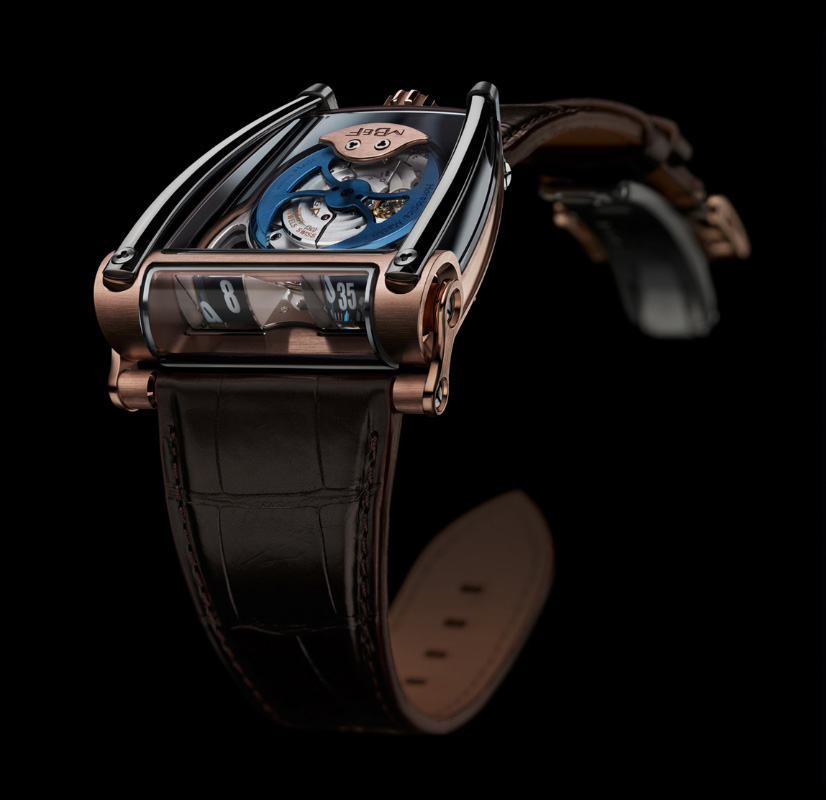
Even when a watch designer specifically chooses to design a radically unusual watch, their design process is still almost always based on extending from currently accepted watch criteria. One reason for this is that almost all founders of unusual watch brands (the MB&F HM8 is shown below) start with a profound love of current watches and a thorough education in watchmaking.
As is often the case, our own brand is an exception to these starting-points (see below for the fascinating reasons for this).
This initial stage of watch design includes clarifying the purpose and target user of the watch. Is it a tool watch, dress watch, or smartwatch? Will it be used for diving, flying, racing, or casual daily wear? What functional priorities does the target user have?
Committing to these factors helps clarify what functionality, features and aesthetics the watch will have.
With the idea for a new watch defined to some degree, at least as a starting-point, watch designers sketch out concepts, exploring case shapes, dial concepts, hands, and strap materials. These drawings evolve into detailed 3D models using CAD (Computer Aided Design) software, allowing precise visualization and mechanical feasibility checks, such as fitting an existing watch-movement with the other components.
These days, with the easy and cost-effective availability of outsource workers, it’s easy to obtain expert advice and input on any aspect of watch design, as our own brand has done (details below).
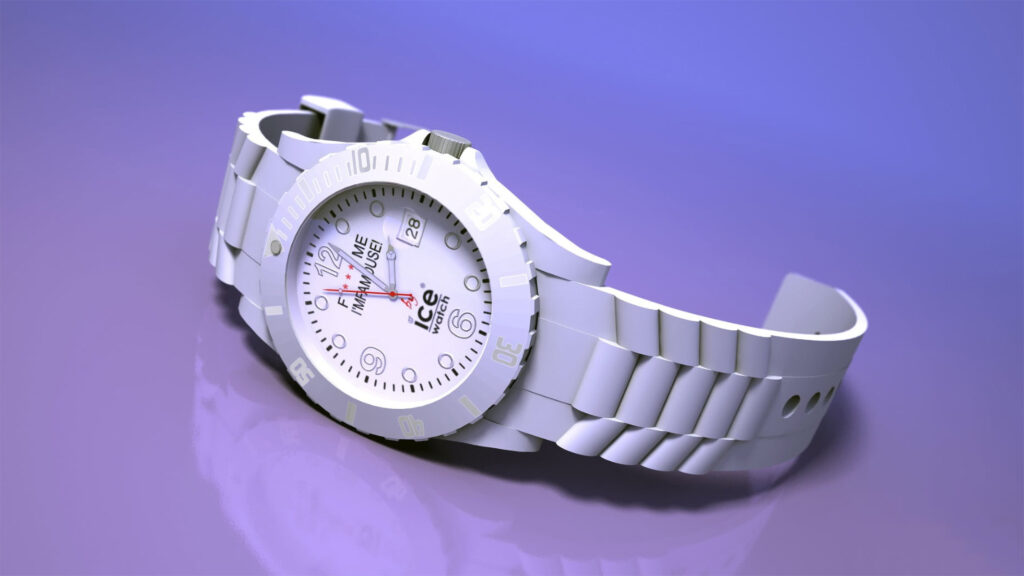
And with realistic 3D modelling (below) it is quick and easy to experiment with how a watch will look when it is finished. Social media can give rapid feedback from potential buyers, helping direct the design process as well as contributing to the marketing and promotion from the start of the project.
Engineers and designers collaborate to draft a Functional Specification Document which outlines:
- Movement type (quartz, automatic, manual, smart hybrid)
- Complications (e.g., date, chronograph, GMT, moonphase)
- Power reserve or battery life targets
- Water resistance and pressure rating
- Operating conditions (temperature, altitude, magnetism)
- And anything else relevant to the specific watch.
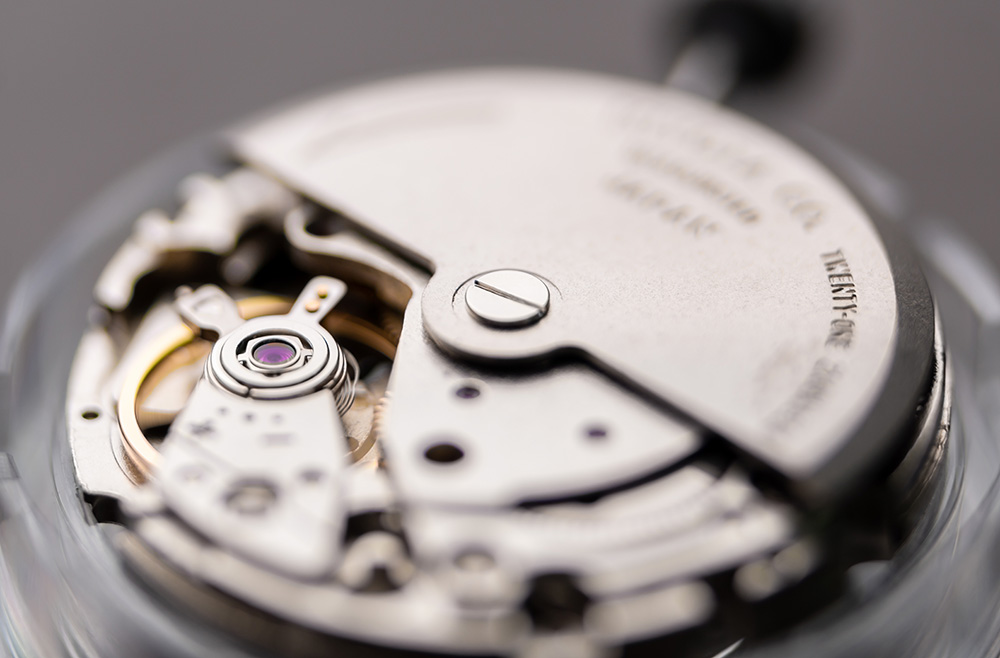
The movement is then selected or developed. For most microbrands, using an existing movement (from suppliers like ETA (below), Miyota, Sellita, or Seiko) is the only realistic option, although high-end or innovative watches (e.g., Richard Mille, Rolex) design their own, which involves mechanical design, CAD modelling, and prototyping.
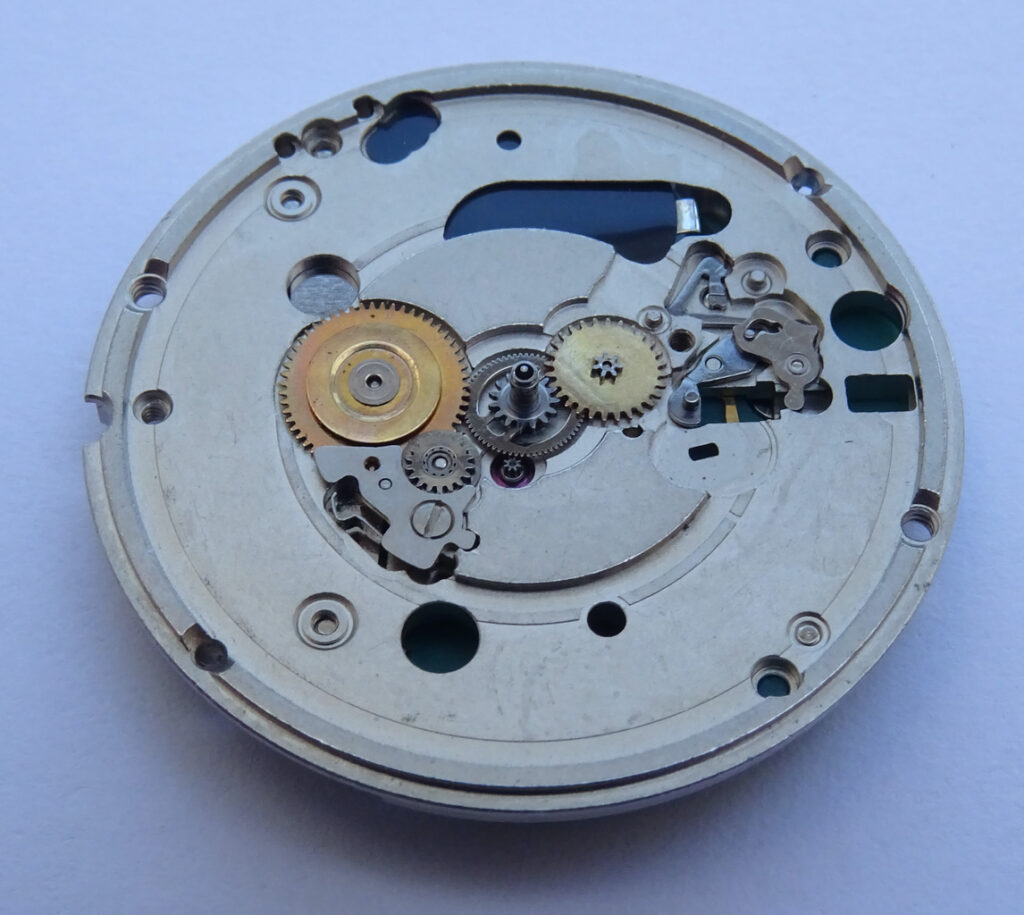
Custom modules can be added on top of base movements for complications (examples shown in the Greubel Forsey watches below) for example:
- Annual calendars
- World time
- Alarm mechanisms
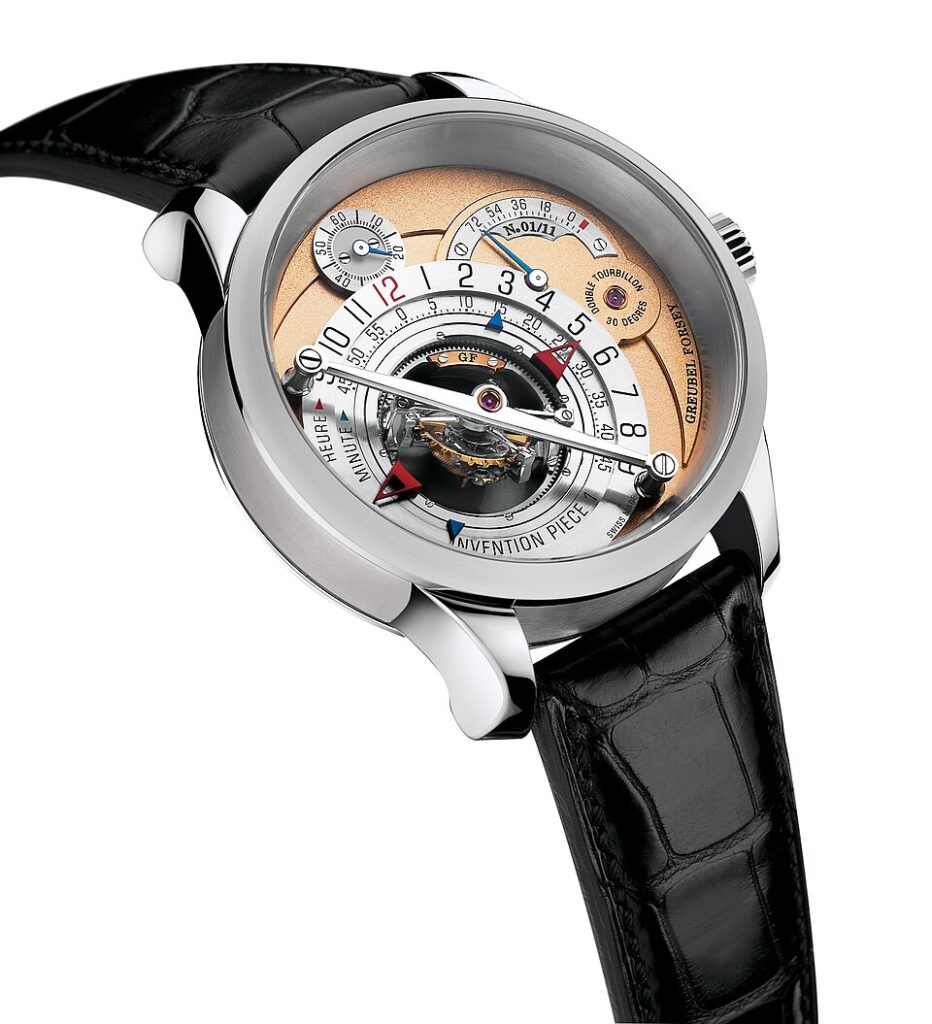
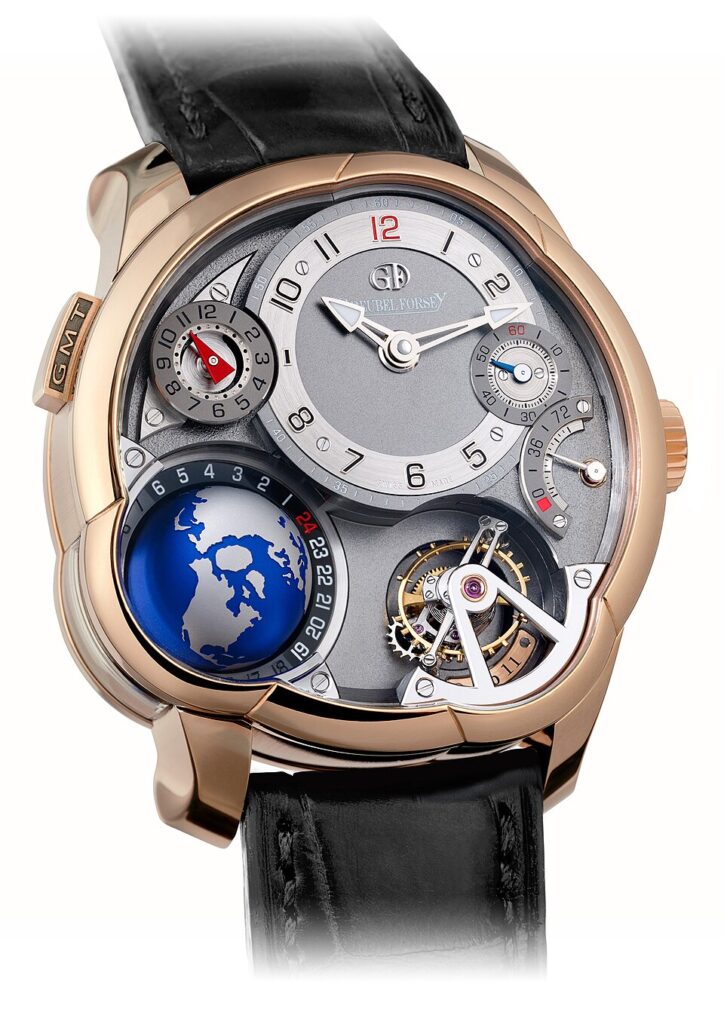
Typically the component and layout design would be next, determining how the functional elements will be integrated physically. This includes locations of sub-dials, date windows or indicators, hand shapes and sizes for legibility and visual balance, crown and pusher placement based on ease of use and wrist comfort, case design to accommodate movement size, complications, and water resistance needs.
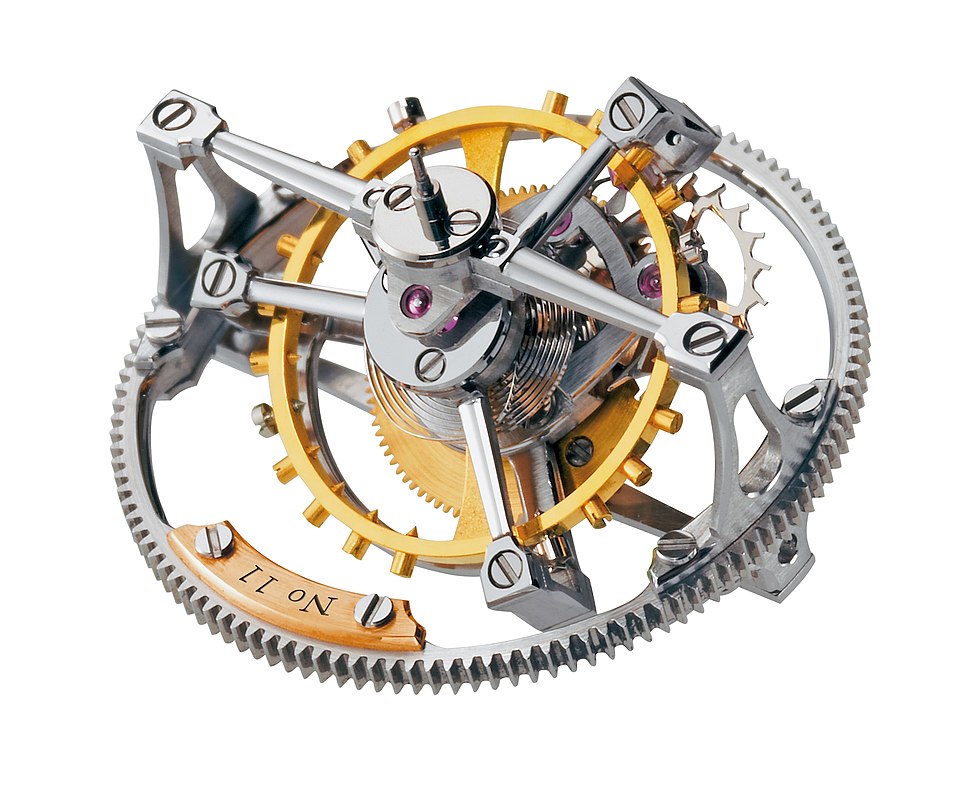
After the layout is finalized comes CAD modelling & prototyping, where functional designs are made in 3D to develop and test. Factors include internal tolerances, dial-to-crystal spacing, case thickness vs. wrist ergonomics, hand clearance and alignment, and actuation feel of crowns and pushers.
Real-world usability, as well as manufacturing elements, are then tested, which is the prototyping phase. Testing and validation includes mechanical stress tests (shock, vibration), water resistance testing, thermal cycling, and user experience testing: are functions intuitive and reliable? For smart or hybrid watches, this stage includes firmware testing.
Once validated, the functional design is optimized for manufacturing. The production engineering includes tooling for components (cases, hands, dials), assembly process design, and tolerance standards to ensure consistent function across batches produced.
Manufacturing a watch.
Once the design is finalized, prototyping begins. The case is typically CNC-machined from a solid block of metal (such as stainless steel or titanium), while the dial might be laser-etched or printed. Most watchmakers use an existing movement although a few design their own.
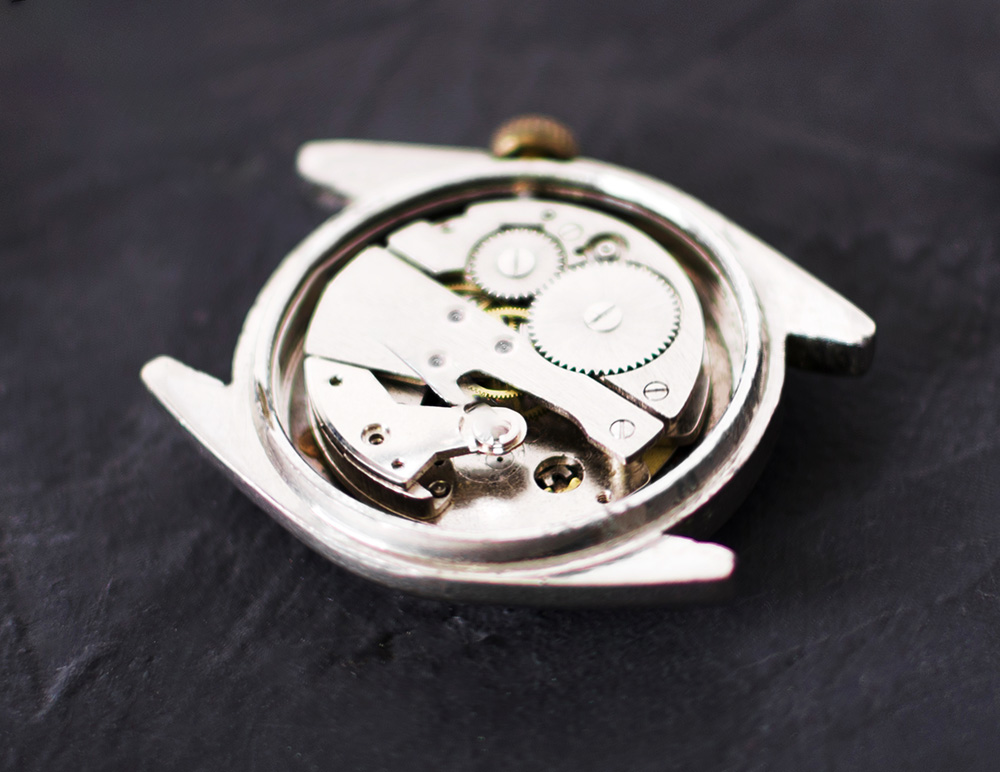
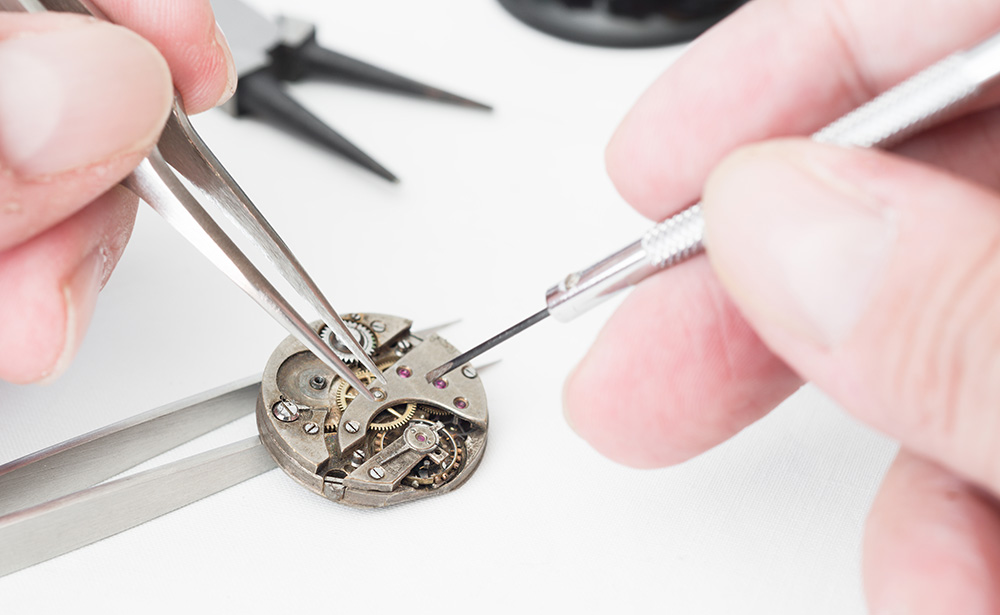
Assembly is a highly skilled and specialized process.
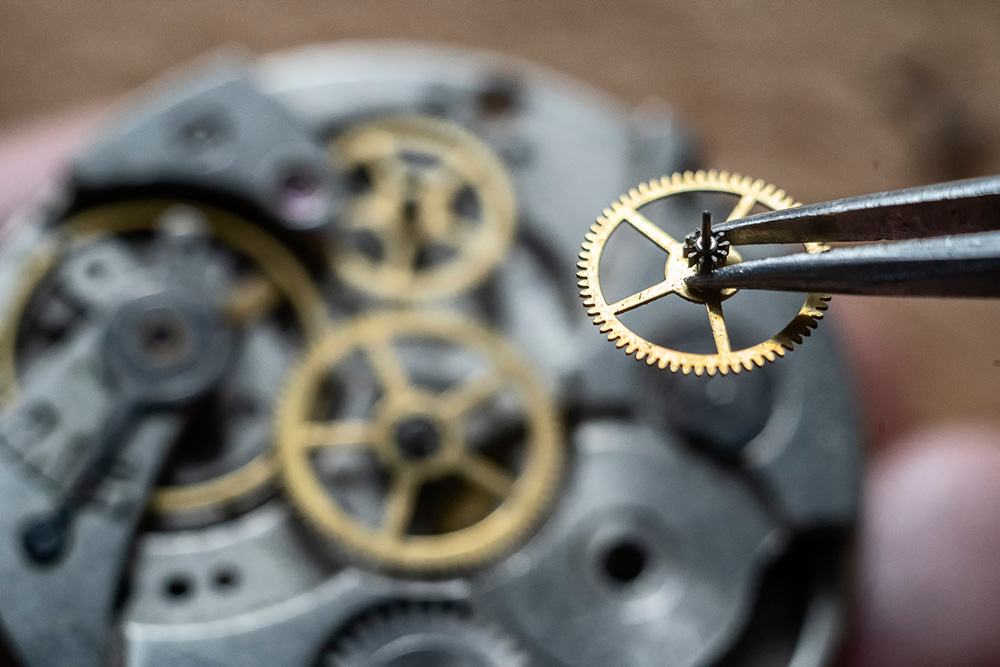
The dial and hands are added to the movement and case, followed by water resistance testing and final quality checks.
The result is more than just a timekeeper—it’s a wearable expression of the designer’s dreams. From concept to wrist, creating a new watch can take months or even years, reflecting the complexity and precision required.
As I’ve explained, most watches are made as very much an extension of existing watch design.
There are a few which invent a new way to display the time, or push the boundaries of existing concepts in radical ways, but the basis of almost all watches (other than our own, below) can be seen to be consistently within the existing watchmaking influence spaces of engineering and fine jewellery.
The Post-Launch Feedback Loop includes gathering customer and service data to inform future updates. Data includes:
- Do complications behave reliably over time?
- Are buttons or crowns wearing out?
- Are there ergonomic complaints?
This loop leads to incremental or iterative updates in future versions.
Making a Watch from Scratch: How “from Scratch” is a Watch, Really?
As I mentioned above, designing (which is somewhat different from “making”, see below) a watch cannot be done fully from scratch in conceptual terms, because anyone designing a watch inevitably already has a vast amount of background and influences which are relevant, whether they are conscious of it or not. Even if they choose to deliberately ignore or do the opposite of some of those influences, even the most unusual watch can only be designed, and seen, in the context of existing watches.
The phrase “from scratch” originates from sports and refers to starting a race from a line scratched into the ground, meaning without any handicap or head start. The phrase is now typically used to mean starting any endeavour from the very beginning, with no prior preparation or assistance.
The phrase “Making A Watch From Scratch” can be seen to refer specifically to the making (rather than the design) of a watch, by hand or by various manufacturing methods. If the watch is to track and display the time it cannot be made without a multitude of prior design steps, even if those were mostly done subconsciously by a master watchmaker, or more commonly implemented by using an already-designed (i.e. not made from scratch, to any extent) movement.
Even those watches which don’t display the time are still seen as “watches” due to the huge amount of cultural context around timepieces and their importance in society until recently (for details on that, see my article: Wristwatches: History and Development, and How They Relate to Society). So their concepts strongly relate to the existing context, rather than really being “from scratch.”
A significant meaning that “making a watch from scratch” can refer to is making a watch by hand, which I will talk about below.
Innovation vs. using existing concepts and components.
The degree to which a new watch is really designed “from scratch” can vary hugely.
Watch design can be seen as a balance between:
- using existing concepts and components,
- creating concepts and components with some degree of innovation.
The degree a watch is towards one or the other of those poles can vary considerably.
In terms of new parts, a few watches have over 600 parts, most of them newly designed, or a watch can be a minor variation on someone else’s design only making slight changes to the aesthetics of a few of the external parts (which is much more common).
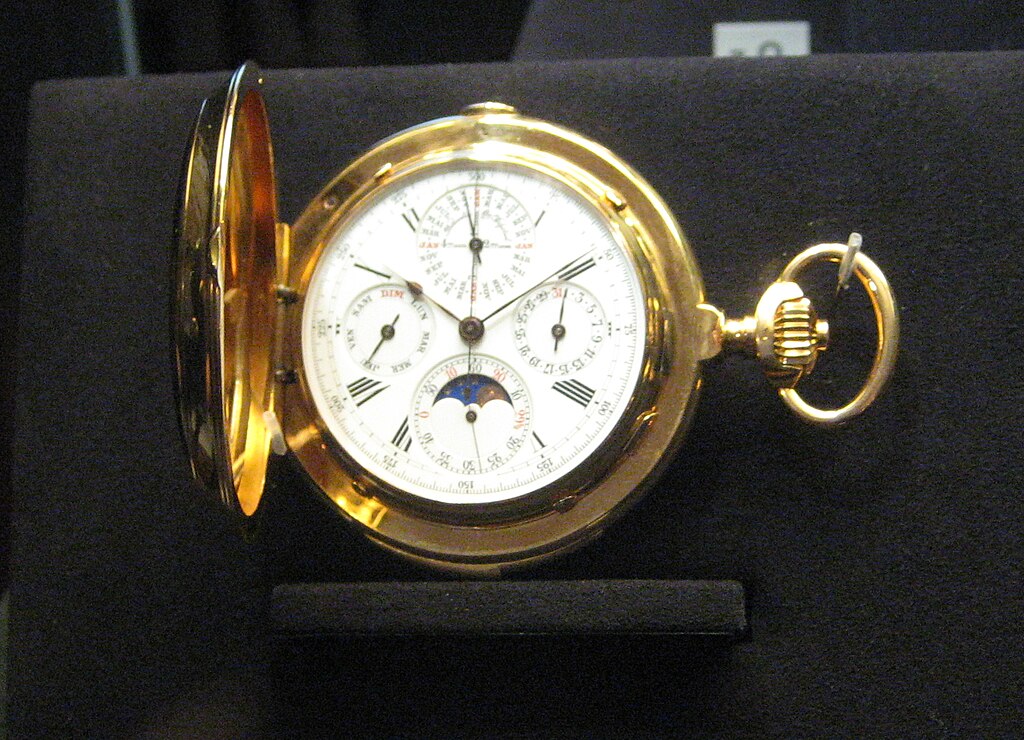
Here is a pocket watch by Vacheron Constantin (below). Some of their pocket watches have 2,877 components and 245 jewels.
Some limited-edition watches only change the colour of the dial so it can be marketed as “limited-edition,” and are, understandably, disliked for doing so. See my article on Limited Edition Watches: What Makes Some of them Loved and Some of them Hated.
As I mentioned above, most watch parts these days are designed by CAD (computer-aided-design) and manufactured by CNC (computer numerically controlled) machining.
New materials and processes have fundamentally changed how some watch parts are made. An example is silicon parts which don’t need lubrication, allowing significant changes to the shape of important watch parts.
By contrast, our own watches (details below) use almost no aesthetic influences from watch-design or from the engineering and fine-jewellery contexts it arose out of, instead being based on a simple, intuitively easy-to-read 12-point time-ring from much more ancient horology, which facilitates the aesthetic basis of our watches genuinely fitting the broadly-agreed definitions of art. The functionality of our watches uses quartz time-tracking, but, other than that, has little relation to watchmaking.
Hand-made watches.
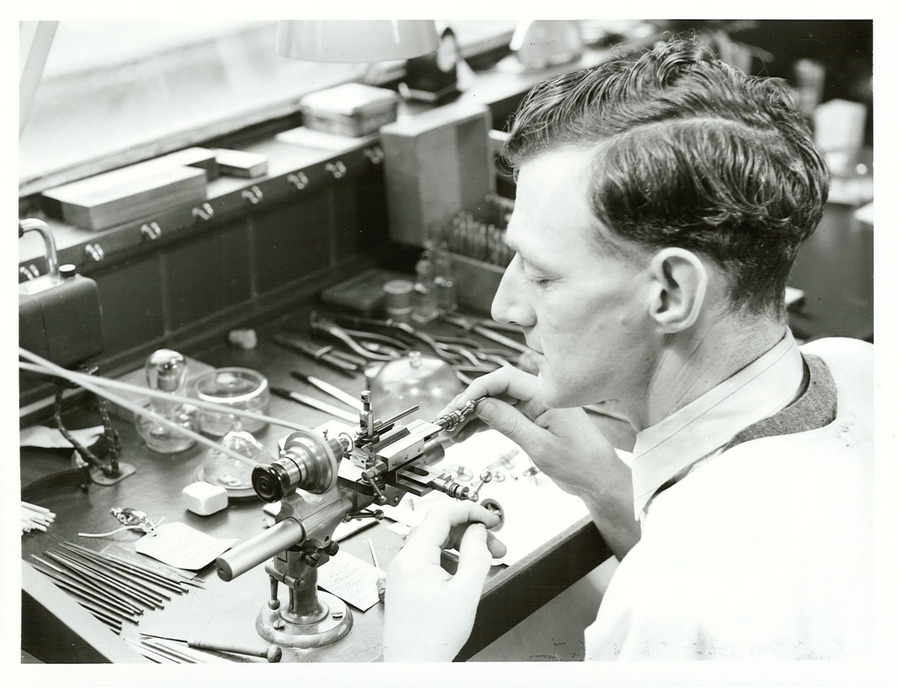
A few watches still exist where almost the whole watch is made by hand. This certainly aligns with the concept of making a watch from scratch, although doesn’t necessarily include the watch actually being designed by hand (or from scratch) which is different.
Most small watchmakers who make watch parts by hand these days, specialize in one component, a set of components, or in assembling watch components.
Brands including Audemars Piguet, Vacheron Constantin, Patek Philippe, Greubel Forsey, MB&F, Laurent Ferrier, Ferdinand Berthoud, Louis Moinet, Armin Strom, De Bethune (the De Bethune DB28 is shown below), and Voutilainen make watches mostly by hand, including casing, finishing, polishing, decorating, and assembly. They make relatively few watches per year, typically less (sometimes a lot less) than 60,000, compared to mass produced watches such as Rolex or Omega who make over a million per year.
Brands like A. Lange & Söhne and Breguet do substantial machine work with “mostly by hand” applying more to finishing/assembly than to every component.
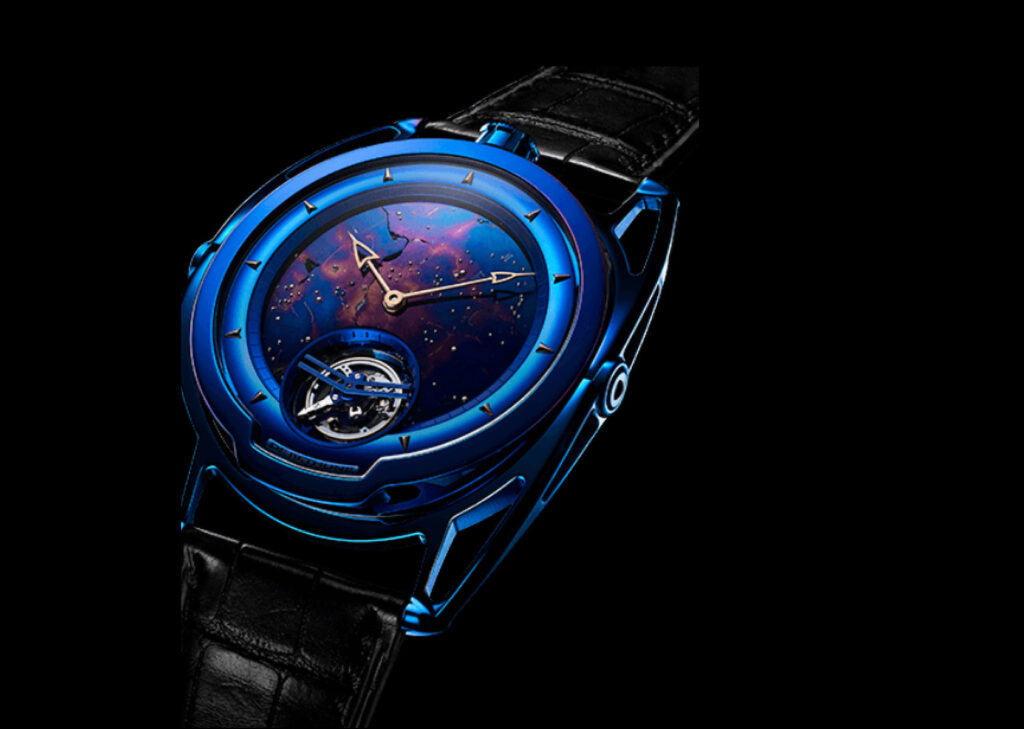
Greubel Forsey’s Hand Made 1 is more hand-made than most. According to their own communications 95% of its 308 components are crafted by hand using traditional hand-operated tools. Making one of these watches takes six thousand hours. Even making one single screw requires up to 12 different operations that can take up to eight hours to complete.
Another example are the Naissance d’une Montre watch collaborations, which, although designed by a team overseen by Greubel Forsey and Philippe Dufour, was mostly made using traditional, hand-operated processes. The first prototype sold for over $1.46 million.
Some of the independent watchmakers, like Philippe Dufour, hand-finish their watches. They incorporate some machine-made components, but the final finishing and assembly are mostly done by hand. Other brands known for the high quality hand finishing include A. Lange & Söhne, Vacheron Constantin, Kari Voutilainen, Breguet, and Romain Gauthier.
Many of our own watches have a case/body which is hand cast by small artisan British casting foundries, and also individually polished by hand, in addition to the aesthetics of the watch being very much personal artistic exploration . . .
Why Unconstrainedtime Watches are Made so Differently from other Watches
The philosophy of our unique watches:
In 2013, a dream revealed something extraordinary: a vision of how timepieces could transcend their traditional bounds and become pure artistic expression.
This dream showed me the general concept of our unique time-display and how its simplicity, small footprint and neutral aesthetics can be used to facilitate artistic exploration. The dream presented a range of different creative concepts and ideas which I used as starting-points for my personal explorations, based on my long-term artistic obsessions (such as fractals, and organic forms and textures).
The basis of our watch is using our innovative, minimal time-display to maximize freely chosen creativity. The time-display necessitated a ring-shape for the 12 time indicators, so that they are in the traditional hour positions making the watch intuitively easy to read. So the custom design of the internal components was focused on minimizing the space those components required, in order to maximize the creative freedom of the artistic focus of each watch.
Each of our unique watches is initially created as a fine-art sculpture with the 12-point time-ring and its associated ring-shaped body/case as a fundamental intrinsic element of the creation from its genesis.
I was, as the founder of UnconstrainedTime, the artist who created the visible surface of each of our initial range of watches, and had them 3D modelled and rendered, under my detailed supervision, by expert outsource workers. The watches often evolved to some extent as I saw how the 3D renders looked somewhat different from my sketches.
See the Inspirations and Development sections on the following pages for the specific creative influences and how they were used in each of our watches:
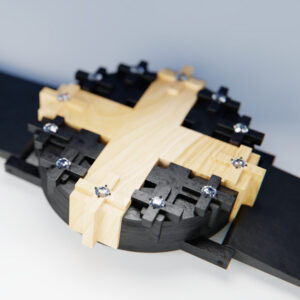
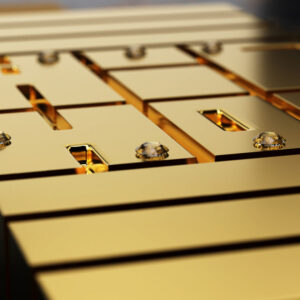
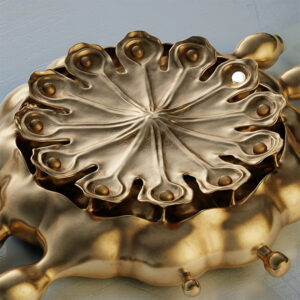
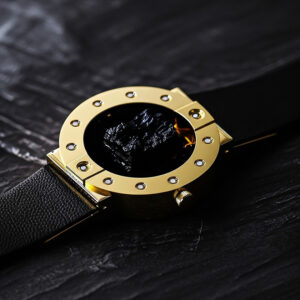
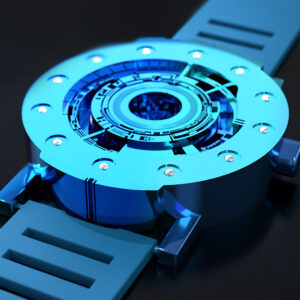
I had some general knowledge in relevant areas (although little knowledge of watches until I started this project), but not enough specialist knowledge to implement the design of internal components, so that was outsourced to suitable experts.
Creating a significantly new watch brand like ours (rather than extending from existing watchmaking) is best done by a generalist such as myself, since an overall understanding of many different areas is ideal, including art and aesthetics, philosophy, physics, product design, mechanical engineering, electronics, materials science, marketing, sales, business systems etc.
While areas of relevant information can be researched online and specific skills can be outsourced, it is still optimal to have a generalist managing the whole project, because different specialist aspects of the design need to work together as a whole and relate to each other effectively, which requires a good understanding of the overall project and how it works.
How each part of our watches was created
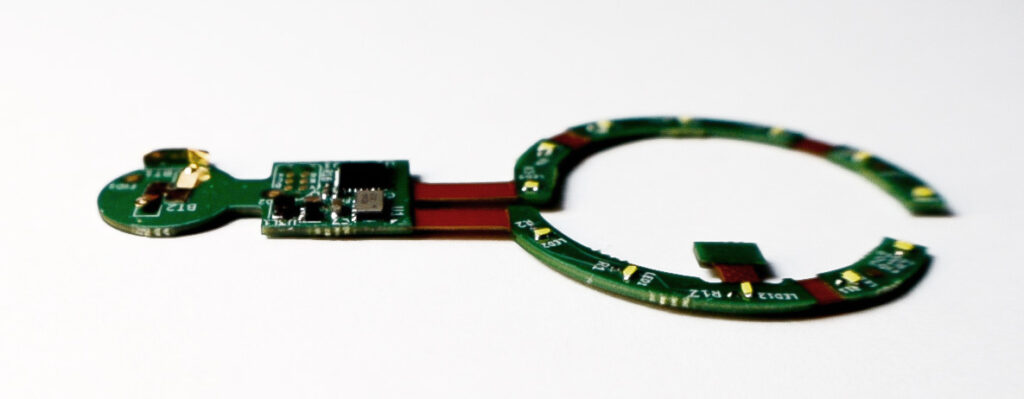
After our time-display concept was determined to be a ring of 12 LEDs, the most fundamental element of UnconstrainedTime watches’ internal components was the printed-circuit-board which would hold the ring of LEDs and the microcontroller and other components which enable the time-tracking and time-display functionality.
While there are very few non-smart watches which use a microcontroller, we’re not the first, since Devon Watches also use microcontrollers to implement their complex mechanical time-belt displays.
Our printed-circuit-board evolved through several stages, developed by several different electronic consultants, while I was keeping in mind how it would work with different spatial configurations in future watches, although plans for those have already evolved somewhat:
Other internal parts, and materials used for them, were designed from first principles, optimised for their function, aesthetics (where they can be seen), reliability and manufacturing/assembly.
Parts unique to our watches (which is all of the parts other than screws, spring, wire snap ring, and O-ring) were designed to be 3D printed from the optimal materials for the functionality of each part (as shown above). As well as making prototyping and small-batch manufacture more realistic, this also means that spare parts are available indefinitely since they can be made in batches as and when they are needed.
The only standard parts in our watches, other than those used in the electronics, are screws and O-ring. From my initial ideas, experienced product-designers, design-for-manufacture experts, manufacturing consultants (including one who also works with Formula 1, America’s Cup, and aerospace), and prototyping consultants improved and developed the exact parts, how they will be made, and how they work optimally together.
The outside case/body of our watch was, of course, created individually for each watch, using the fine art (and conceptual art jewellery) process of personal creative exploration, being part of the evolution of the artist’s work and each watch evolving during its creation (which are part of what distinguishes art from design).
The challenges of doing something so different.
One of the challenges of our watch being so different was that our watches didn’t fit into conventional categories in terms of getting it designed, made and assembled.
For example, watchmakers wouldn’t assemble our watches because they are too different from conventional watches, nor were they similar enough to low-cost digital watches for an electronics micro-assembly company to be willing to assemble them, especially since the hand-polished areas on the outside of our watches must not be scratched. This meant that we had to do all our own research to find suitable suppliers of parts such as screws, O-rings, straps, spring-bars etc. as well as details such as the complex documentation and compliance needed to ship watches internationally. We had to work with different industries including custom electronics manufacture, artisan metal casting foundries, specialist micro machining consultants and workshops etc. I hand-assembled the first few watches myself.
The uniqueness of our watches also increased the time necessary for design and prototyping, since many aspects of our watches needed to genuinely be developed from scratch, with many stages of adjustments and improvements during design and prototyping stages.
For example, after the initial test example of the case/body of our watch was 3D printed, cast and hand-polished, I discovered that it wasn’t precise enough for the other parts to fit perfectly, due to the inevitable and uneven distortions caused by the 3D printing and casting process: And the shape of our case/body meant that direct 3D printing in metals was not possible (since it was not realistic to remove the necessary support-structures).
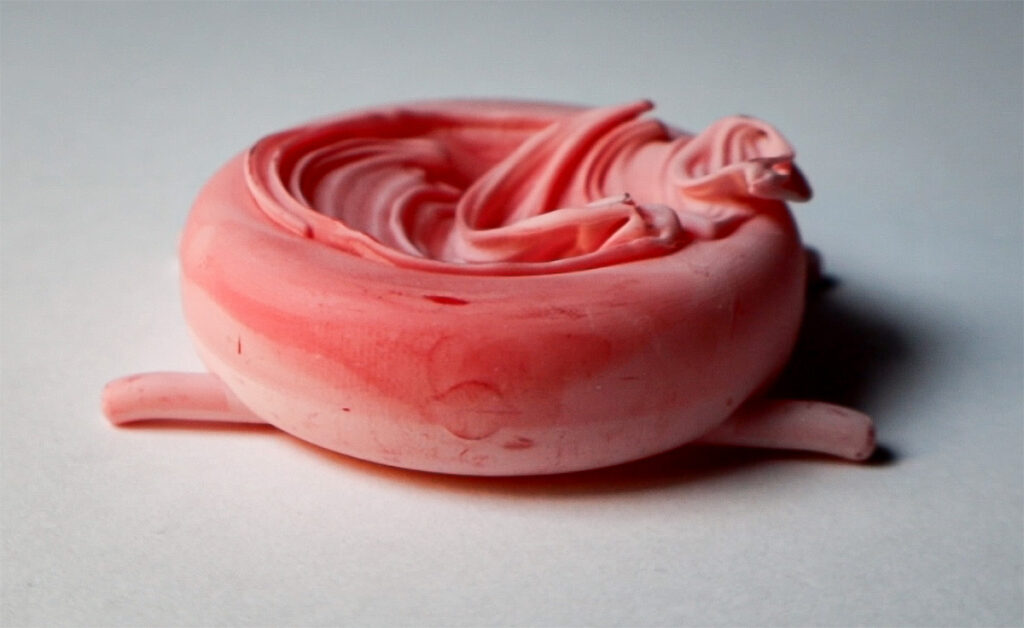
So I assumed that the areas of the case/body which needed to fit with other parts, such as the 12 holes for the time-display and the hole for the button, would have to be CNC machined in order to be precise enough to fit with other parts, after the case/body as a whole was 3D printed in resin (below) then cast in metal by a small British artisan casting foundry, and before it was individually hand-polished.
I started working with a consulting company to implement the unusual requirements of our machining, since they seemed to be the only company I could find in the UK which could do what we needed to the specified tolerances. They also work with Formula 1, America’s Cup yacht racing, and aerospace. While they were working on the challenges of the machining for our first watch, I realised that instead of needing to machine the body to precisely fit some of the internal parts it would make more sense to include some of those details (such as the ring of 12 holes) as the body was printed and cast, then precisely measure the result and adjust the internal 3D printed parts to fit the reality of those details of the cast body (slightly distorted by the casting process). This simplified the machining process.
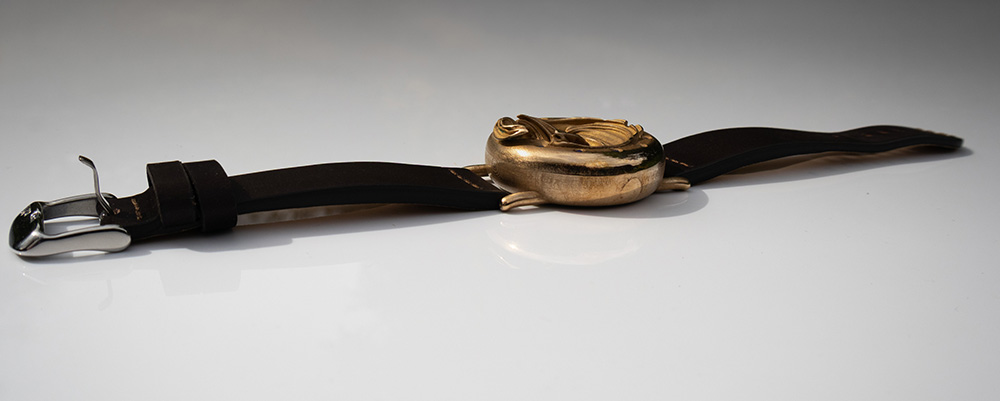
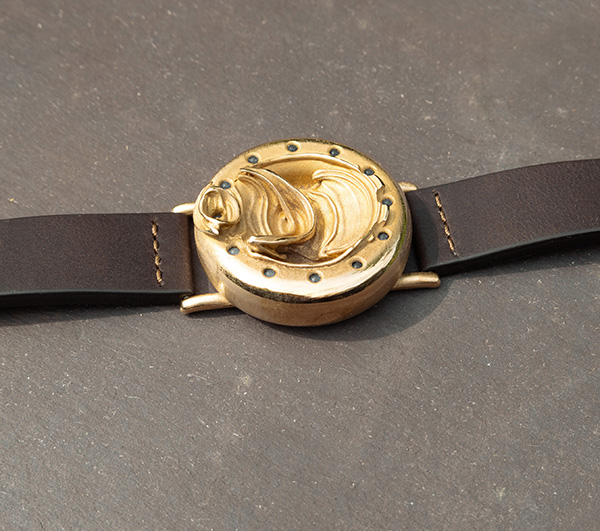
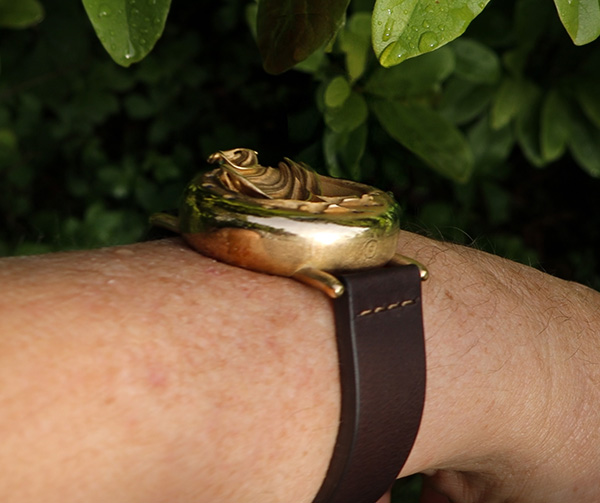
The hand-polishing process I will use on many of our watches (including our first watch, Fractal Emergence, shown below, as well as Cross #1 and Poppy Seed Pod) is also unusual, and more related to sculpture or art jewellery finishing than fine-jewellery or watch finishing. This is because the perfectly smooth surfaces of fine jewellery don’t make sense with most of our watches, since our watches are not based on the simple, symbolic forms used in fine jewellery, nor the machined engineering-based forms used by almost all watches, and our creation process is not much related to either of those.
Our watches are part of the fine art sculpture and conceptual-art-jewellery spaces, where complex forms and textures are common (see above for more details). It made sense for the more “organic” of our watches, including our launch watch, Fractal Emergence, to be partially polished to bring out the lustre of the metal while retaining some of the authentic surface texture that is intrinsic to the nature of 3D printing and investment-casting, rather than trying to hide the process as most watches do due to their conceptual basis in engineering and fine jewellery.
The hand polishing process starts with a sequence of increasingly fine grades of sandpaper finishes and with diamond polishing paste, the final polish using rounded 0.5 micron diamond particles suspended in oil to burnish the protruding areas of the surface:
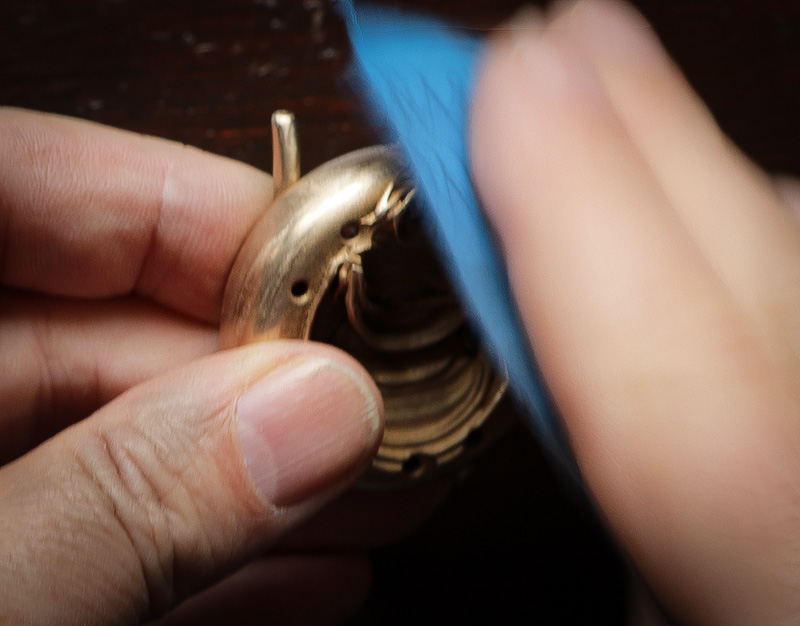
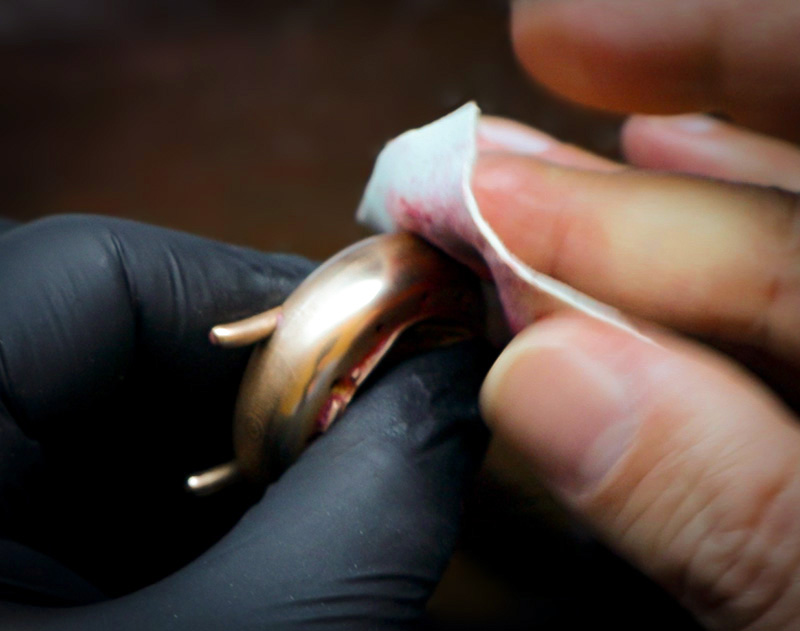
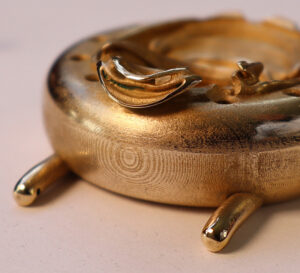
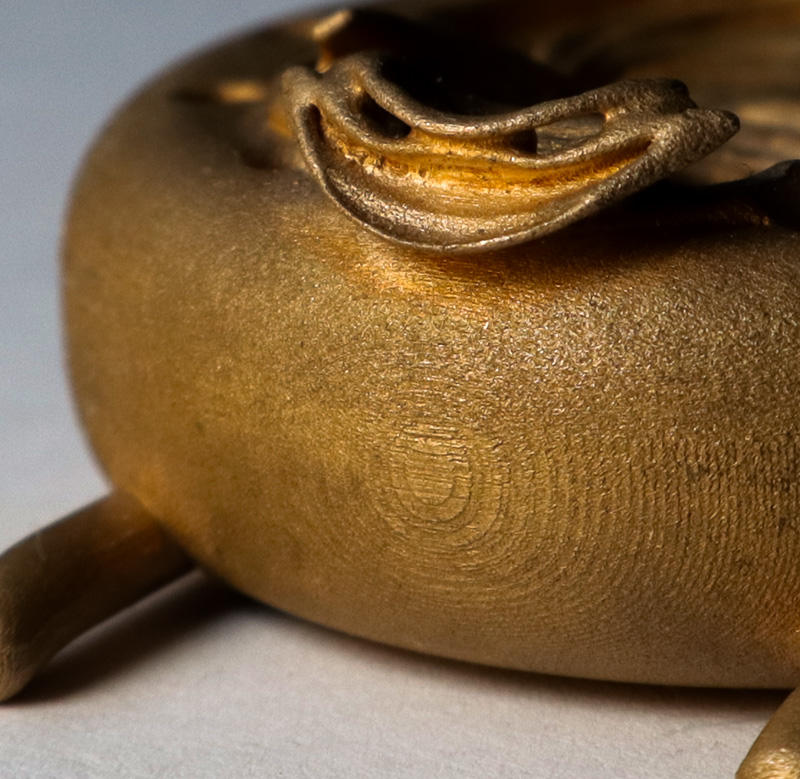
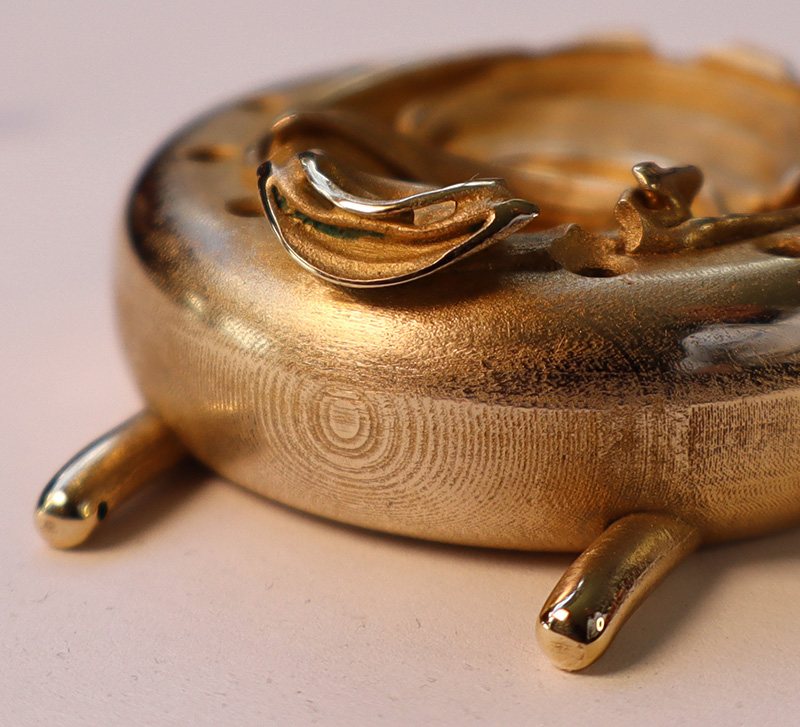
The partial polishing of the body/case of our Fractal Emergence 41mm watch is shown below, highlighting how the circular areas of textures resulting from the 3D printed layers are clearly manifested into bronze by the artisan casting process and deliberately enhanced by our unique hand polishing process:
The raw cast body:
After hand polishing:
And here is the whole watch:
Future developments for UnconstrainedTime watches.
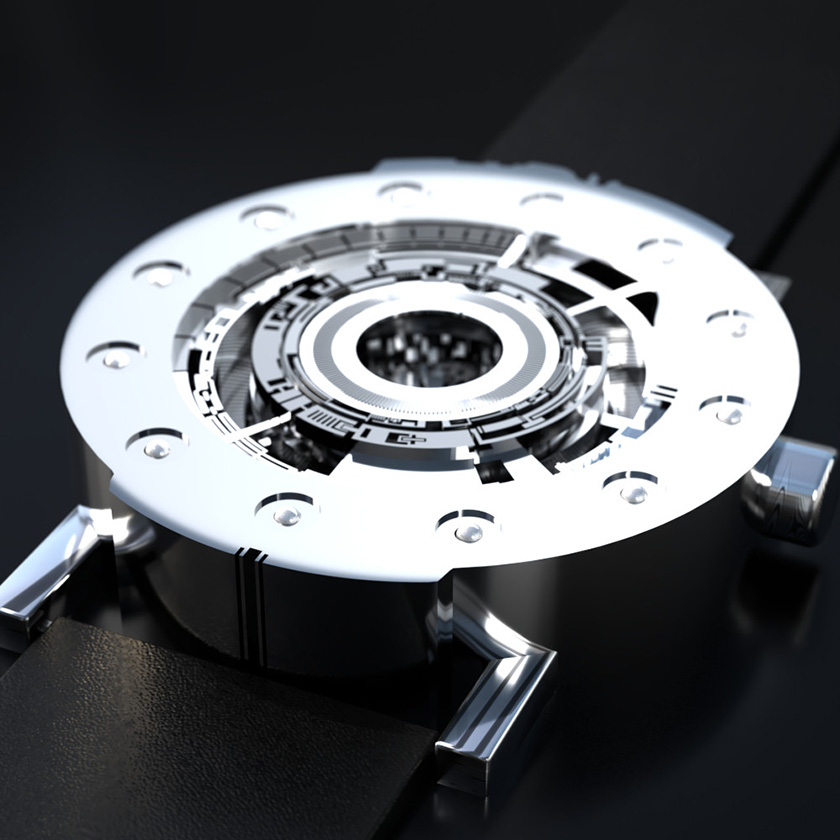
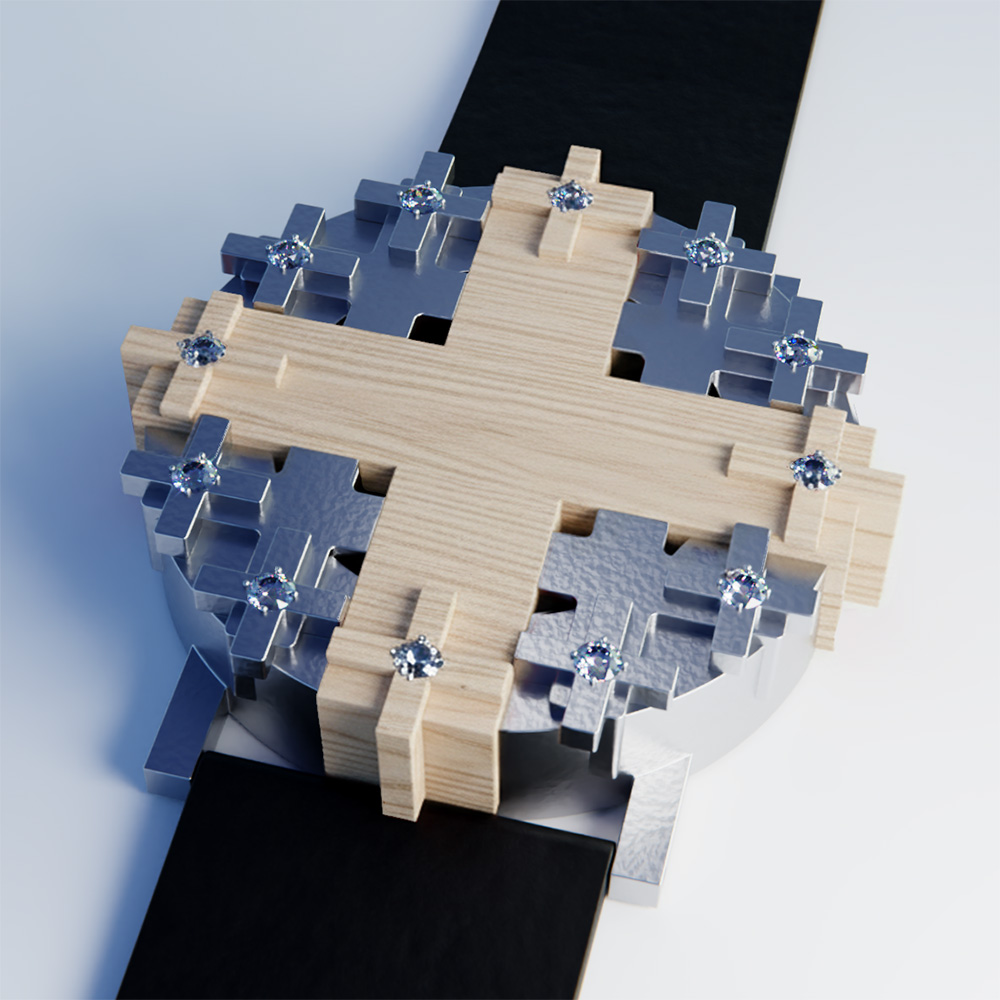
Some of our future watches will have mostly the same internal parts as our launch watch, with the outside of the case/body, of course, being very different for each. This decreases the lead-time for designing the internal areas and making the watch, and also facilitates economies of scale since most parts can be created or purchased in larger batches.
There are two main developments needed in the overall design of internal parts of our future watches. One area of development is needed because some of our watches are based on a hollow ring-shape, unlike the initial launch watch (and probably the next two launches as well) which had the centre of the ring-shape partially filled, which necessitates redesign of many of the internal parts.
The other main difference is that, from our second watch launch (see here for updates on our launch schedule), we plan to make each of our watches also available in a smaller 30mm size (as well as the larger 41mm), so the internal parts will need to be partially redesigned as most of them will need to reduce in size.
We plan to invite collaborations with established creators, who might use studio art-jewellery techniques to create a watch starting from one of our existing body/case concepts, maybe creating unique one-off watches by hand.
It will be fascinating to see the results of these collaborations, as well as the watch creations from our open art / watch-design competition and my own continued artistic explorations, in addition to the valuable feedback from our fans, all of which will help direct the evolution of our unique brand.
What is the most interesting aspect of designing or making a watch from scratch, for you personally?
If you’re interested in our watches, make sure you don’t miss our launches . . . subscribe to our Priority-list right now.
Author: Chris Melchior

This article was authored by Chris Melchior, founder of UnconstrainedTime and creator of the original range of wrist-worn sculptures of this unique artistic adventure.
Chris has extensive knowledge and experience of creativity, including fine art and cutting-edge contemporary music composition, and was awarded a First Class Honours Degree in fine art and music, with a minor in philosophy, from a leading UK University.
Chris’s life-long artistic obsessions include organic forms and textures, abstraction, fractals, and the aesthetic essence of musical genres.
He has developed unusually deep insights into the elemental concepts underlying areas including Eastern and Western philosophies, science and technology, creativity and the arts, as well as advanced empirical spirituality in which he is acknowledged as a leading authority.
He has a profound fascination and love for the unique and synergistically creative combination of fine art with the ancient essence of time-keeping which evolved into the UnconstrainedTime project.
Leave a Reply